
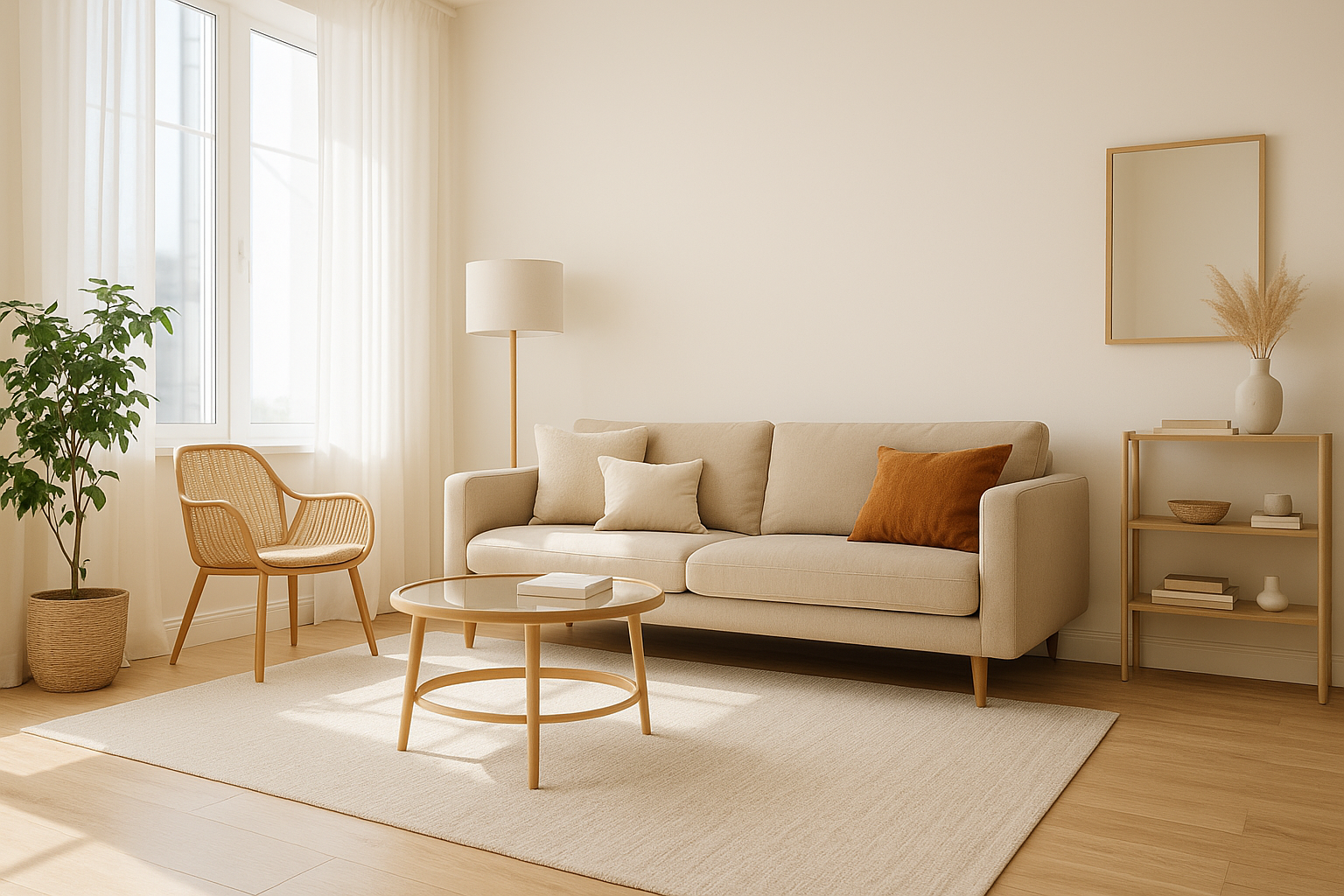
A small living room can be both cozy and stylish but if not designed intentionally, it can feel cramped and dark. The good news is that with smart choices in layout, color, lighting, and furniture, you can dramatically expand the sense of space and airiness in even the tiniest living rooms.
This article will guide you through the best tips and tricks to make your small living room feel bigger, brighter, and beautifully functional.
Choose Light Colors for Walls and Furniture
One of the most effective ways to make a space feel larger is by using light colors. Light hues reflect natural light, which visually opens up the room.
Best colors for small living rooms:
- Soft whites
- Creams
- Light grays
- Pale blues
- Warm beiges
Stick to a neutral base and add color through accents like cushions, artwork, or a single feature wall. Avoid heavy, saturated tones on walls unless used strategically and in moderation.
Maximize Natural Light
Natural light makes any room feel more open. To maximize it:
- Avoid heavy drapes or dark curtains
- Use sheer curtains or blinds that allow sunlight to filter in
- Keep windows clean and unobstructed
- Position mirrors across from or adjacent to windows to bounce light
If privacy is a concern, opt for frosted window film or semi-transparent fabric that protects your space without blocking light.
Choose the Right Furniture Scale
Oversized furniture can overwhelm a small room. Choose pieces that are appropriately scaled and consider their visual weight.
Smart furniture choices:
- A slim-profile sofa or loveseat
- Armless chairs or ones with narrow arms
- Leggy furniture that sits off the floor to show more space
- Nesting tables instead of one large coffee table
- Multi-functional pieces like storage ottomans or fold-out tables
Avoid placing all furniture against the walls—floating some pieces can actually make a room feel more spacious.
Use Mirrors Strategically
Mirrors are a small space’s best friend. They reflect light and make walls seem to expand.
Tips for using mirrors:
- Hang a large mirror behind a sofa or above a console
- Use mirrored furniture for subtle reflections
- Install a gallery wall with mirrors in different shapes and sizes
- Lean a floor mirror in a corner for height and depth
Avoid placing mirrors directly across from clutter or distractions—reflect something beautiful or bright.
Keep the Floor Clear
Seeing more floor instantly makes a room feel more open. Try to elevate or minimize furniture that sits directly on the floor.
Ideas to clear the floor:
- Mount the TV on the wall
- Use wall-mounted shelves instead of standing bookcases
- Opt for floating furniture like wall desks or vanities
- Choose sofas and chairs with exposed legs
Keep floor accessories minimal. One or two statement pieces like a rug or basket are better than many scattered items.
Declutter and Curate
A cluttered room feels smaller, no matter how you decorate. Simplify your space by keeping only what’s necessary or beautiful.
Decluttering strategies:
- Use closed storage to hide everyday items
- Limit the number of accessories on shelves and tables
- Store items in coordinated baskets or boxes
- Stick to minimal wall decor for a cleaner look
Less truly is more in small spaces. Curate rather than decorate.
Optimize Layout for Flow
The way furniture is arranged affects how spacious the room feels. Make sure there’s a clear, unobstructed path through the space.
Layout tips:
- Don’t block windows or natural walking paths
- Avoid pushing everything against the walls—it can feel boxed in
- Consider zoning the room using rugs or lighting
- Angle furniture slightly to break up rigid lines and create interest
Even in a tiny room, intentional placement makes all the difference.
Use Vertical Space
Maximize wall height to create a feeling of expansion.
Vertical styling ideas:
- Add tall bookcases or shelving units
- Hang artwork higher to draw the eye upward
- Use vertical wall panels or wallpaper with vertical patterns
- Choose tall plants instead of wide ones
When your eyes are drawn up, the room instantly feels taller.
Stick to a Cohesive Color Scheme
Consistency in your color palette creates a unified, calm feel, which is essential in smaller rooms.
Tips:
- Keep walls, large furniture, and rugs within the same tone
- Use similar hues for accents like pillows, vases, and artwork
- Avoid high-contrast combinations that visually break up the space
- Choose monochromatic or analogous color schemes for a seamless flow
Subtlety enhances spaciousness.
Let Rugs Define (Not Divide)
A well-placed rug brings warmth and definition to your space. In small rooms, the right rug can make the area feel more connected.
Rug rules:
- Choose a rug large enough to fit under all major furniture pieces
- Avoid small rugs that break up the floor visually
- Use light-colored rugs to maintain brightness
- Consider a striped rug to elongate or widen the room
Rugs should ground your layout, not interrupt it.
Incorporate Transparent Elements
Clear or reflective furniture takes up less visual space while offering functionality.
Examples:
- Acrylic or glass coffee tables
- Lucite side tables
- Mirrored trays or shelves
- Glass lamp bases or metallic finishes
These choices help furniture “disappear” into the background and maintain an airy feel.
Add Lighting Layers
Don’t rely on a single overhead light—layers of lighting add depth and help highlight focal points.
Lighting tips:
- Use a floor lamp in dark corners
- Add table lamps for soft, cozy lighting
- Install wall sconces to free up surfaces
- Use LED strips or backlighting for shelves or TV areas
Warm lighting (2700K–3000K) is most flattering and inviting.
Hang Curtains Higher
Create the illusion of taller ceilings by mounting curtains close to the ceiling and letting them fall to the floor.
Curtain styling tips:
- Use lightweight, sheer fabrics
- Match curtains to the wall color for a seamless look
- Avoid bold patterns that cut visual height
- Choose floor-length styles to elongate the walls
This simple tweak adds vertical dimension and elegance.
Embrace Minimalism with Personality
A small room can still have charm—just don’t overcrowd it. Choose a few well-loved pieces that tell your story.
Ideas:
- One statement artwork
- A cozy reading chair with a bold pillow
- A curated shelf with personal items
- A neutral sofa with colorful throws
Keep it personal, not packed.
Final Thoughts: Less Space, More Intention
A small living room isn’t a limitation it’s an invitation to get creative. With thoughtful design, smart storage, and the right mix of colors and materials, you can transform your compact space into a bright, airy, and welcoming retreat.
Focus on what matters: comfort, flow, and feeling good in your space. That’s what great design is all about.