
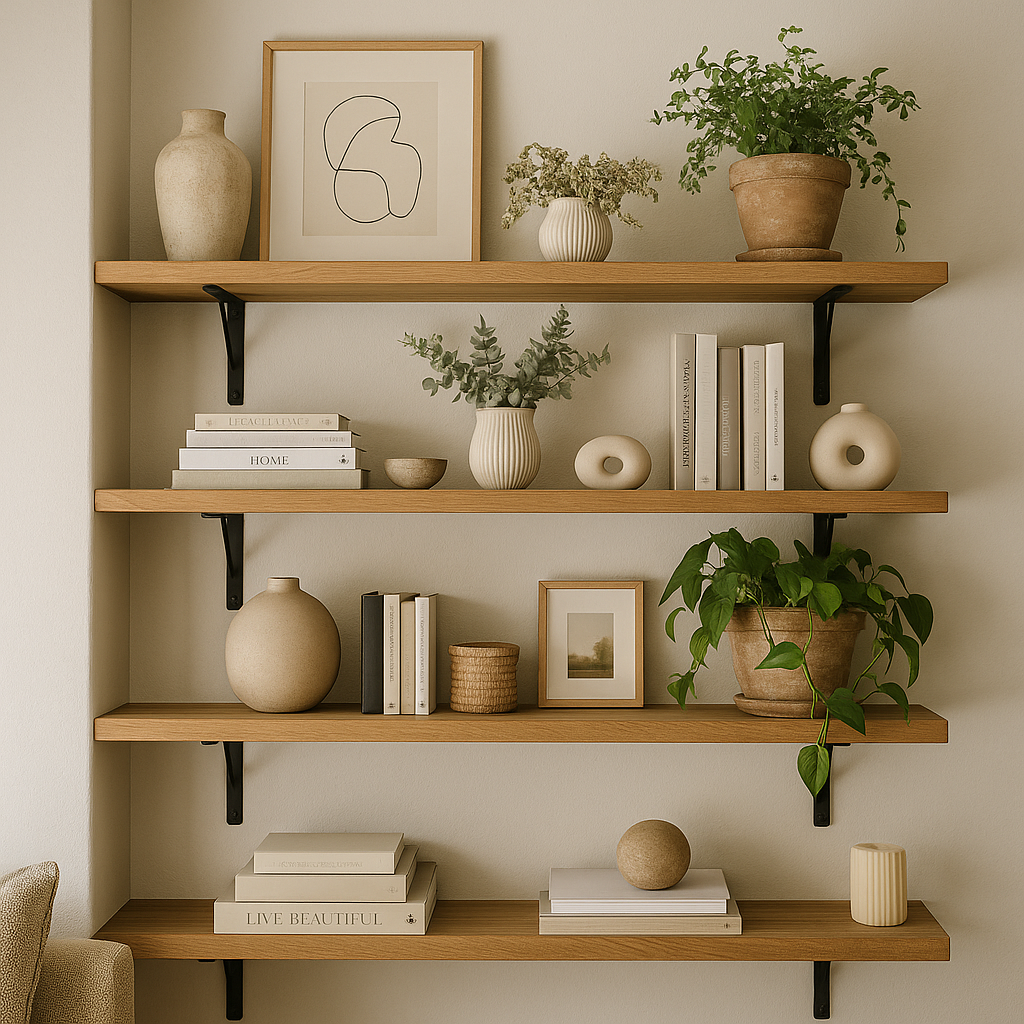
Open shelves can be a stunning design feature in any room—whether in the kitchen, living room, bathroom, or office. They offer a place to show off your personality and style while keeping essentials within easy reach. But without the right approach, open shelving can quickly turn from stylish to cluttered.
Here’s how to decorate open shelves like a pro balancing function, aesthetics, and personality.
Start with a Clean Slate
Before styling your shelves, empty them completely. This gives you a fresh perspective and allows you to:
- Dust and clean the shelves
- Reassess what items you actually want on display
- Plan your layout without visual distractions
Keep only what serves a purpose or enhances the overall look.
Choose a Color Palette
A cohesive color scheme instantly makes your shelves look intentional and polished.
Tips:
- Stick to 2–3 main colors plus natural tones like wood or metal
- Use neutral backgrounds with pops of color in accessories
- Choose objects that fit your home’s overall palette for flow and harmony
This doesn’t mean everything needs to match but cohesion is key to preventing visual chaos.
Balance Function and Beauty
Open shelves are a great opportunity to combine utility with style.
In the kitchen:
- Mix pretty dishes with wooden cutting boards, glass jars, and a few cookbooks
- Use baskets or canisters to store less attractive items
In the living room:
- Combine books, framed photos, vases, candles, and small plants
- Hide remotes or cords in decorative boxes
In the bathroom:
- Display rolled towels, apothecary jars, and a small plant or artwork
- Store personal items in labeled containers or bins
Your goal is to create a space that looks good but still serves your daily needs.
Layer Heights and Shapes
Varying the height and shape of your objects adds depth and movement.
Tips:
- Stack books horizontally and vertically
- Layer art or framed photos behind smaller items
- Mix tall items (vases, pitchers) with short ones (bowls, candles)
- Use items with different textures—ceramic, wood, metal, glass
This variety keeps the eye moving and the arrangement interesting.
Group in Odd Numbers
Designers often work in odd numbers, especially groups of three or five, because they feel more natural and balanced.
Try:
- A stack of books + a candle + a plant
- A large vase + medium bowl + small sculpture
- Three jars in varying heights
Arrange each group as a visual triangle for harmony and structure.
Leave Negative Space
Don’t feel like you have to fill every inch of shelf space. Negative space (empty areas) helps prevent visual overload and allows your display pieces to breathe.
Tips:
- Leave space between groupings
- Avoid stacking too many books or accessories in one area
- Let each shelf have its own rhythm, alternating full and open sections
Minimalism adds a sense of calm and refinement.
Add Personal Touches
Open shelving is the perfect place to showcase things that are meaningful to you.
Consider displaying:
- A travel souvenir or keepsake
- A framed quote or handwritten note
- A small piece of art or family photo
- A handmade ceramic or artisan item
These personal pieces tell a story and make your shelves feel unique—not staged.
Incorporate Greenery
Plants add life, texture, and a fresh element to any shelf. Even a single leafy stem in a glass jar can make a big impact.
Ideas:
- Small potted succulents
- Hanging ivy trailing off the edge
- Dried eucalyptus or pampas grass
- Faux plants if natural light is limited
Plants help soften hard lines and bring organic warmth into your styling.
Think Vertically
If your shelf is tall or extends up a wall, consider how it looks from top to bottom.
Tips:
- Place larger, heavier items on the lower shelves for grounding
- Use lighter, smaller pieces higher up
- Maintain balance from shelf to shelf (not every shelf needs a centerpiece)
- Step back occasionally to check overall symmetry and flow
Use your vertical space wisely without overcrowding.
Use Books Creatively
Books are not just for reading—they’re also fantastic styling tools.
Try:
- Stacking a few with a decorative object on top
- Arranging some vertically with bookends
- Turning a few with the pages facing out for texture
- Using books to create height for smaller items
Hardcover books with appealing spines or colors that match your palette work best.
Don’t Forget Lighting
If your shelves are in a dim space, consider adding lighting to highlight your display.
Options include:
- LED strip lights under each shelf
- Small puck lights
- Clip-on lights
- Wall-mounted sconces nearby
Lighting not only improves visibility but also adds warmth and ambiance to the shelf area.
Refresh Seasonally
One of the perks of open shelves is how easy they are to update.
Ideas:
- Spring: Add florals, pastel accents, or botanical prints
- Summer: Use beachy tones, driftwood, and lighter materials
- Fall: Include amber glass, mini pumpkins, and warm tones
- Winter: Add candles, pinecones, or metallic accents
Small seasonal swaps keep your space feeling current without major effort.
Final Thoughts: Curate, Don’t Clutter
When styled with intention, open shelves elevate your space and showcase your style. They offer the perfect balance between function and decoration—if you focus on quality over quantity.
Take your time, play with arrangements, and trust your eye. With a thoughtful approach, your open shelves will feel like a curated gallery that’s both practical and personal.