
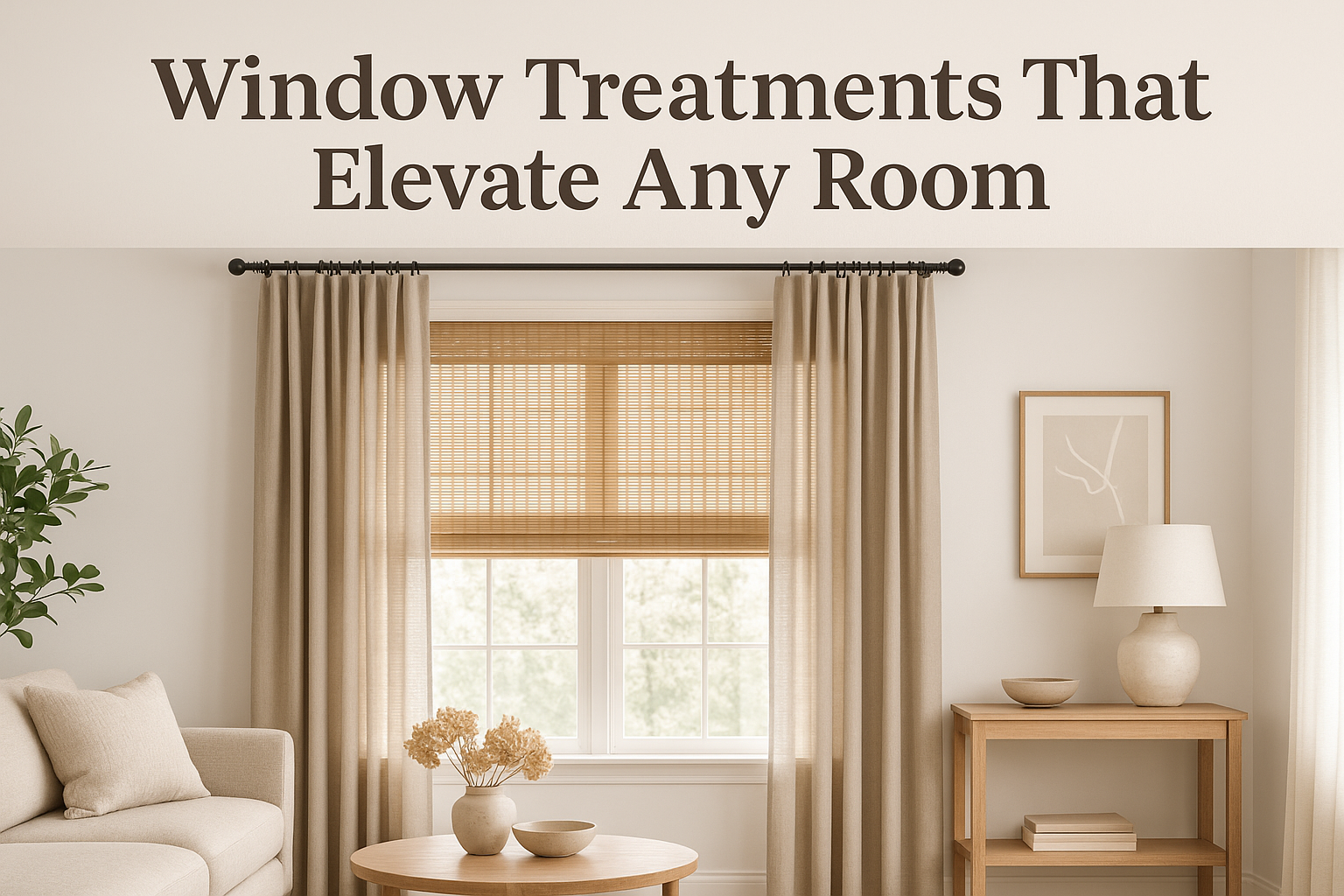
Window treatments are often the finishing touch that can transform a room from basic to beautifully polished. Whether you’re looking to add elegance, coziness, or light control, choosing the right window coverings can drastically affect the overall mood and functionality of your space.
In this article, we’ll explore how to choose and style curtains, blinds, shades, and other treatments that suit your home’s design while enhancing light, privacy, and aesthetics.
Why Window Treatments Matter
Windows are a major design feature and how you dress them significantly impacts a room’s look and feel. Good window treatments can:
- Soften a space and make it feel more inviting
- Frame views and enhance natural light
- Provide privacy and noise insulation
- Control heat and light throughout the day
- Add color, pattern, and texture
Even a simple curtain can dramatically shift the mood of a room when chosen thoughtfully.
Types of Window Treatments
Understanding your options helps you choose the right solution for each space.
Curtains and Drapes
- Curtains are lighter and more casual; drapes are typically heavier and more formal.
- Available in a wide range of fabrics, patterns, and lengths.
- Work well for bedrooms, living rooms, and dining areas.
- Offer strong decorative impact and excellent light control when layered.
Blinds
- Made from materials like wood, faux wood, metal, or vinyl.
- Come in horizontal or vertical slats.
- Best for modern, minimal spaces and when light precision is important.
- Often used in kitchens, offices, and bathrooms.
Shades
- Soft, fabric window coverings that roll, fold, or gather.
- Include options like Roman shades, roller shades, cellular shades, and bamboo/woven shades.
- Provide a sleek, clean look and come in blackout or light-filtering styles.
- Great for bedrooms, small windows, or paired under curtains for layering.
Shutters
- Solid window coverings with slats that open and close.
- Offer excellent privacy, insulation, and timeless appeal.
- Most often used in traditional, coastal, or farmhouse interiors.
How to Choose the Right Window Treatment
Every room has unique needs, and your choice should reflect both function and aesthetics.
Consider the Purpose
Ask yourself:
- Do I want to block out light completely (e.g., in a bedroom)?
- Do I need privacy during the day and night?
- Is the treatment decorative, functional, or both?
- Do I want to insulate against cold or heat?
Your answers will help narrow down fabric weight, opacity, and style.
Think About the Room’s Style
Window treatments should complement your interior design not compete with it.
For example:
- Modern/minimal spaces: Choose roller shades, simple panels, or sleek Roman shades.
- Traditional rooms: Opt for pleated drapes, ornate rods, or full-length curtains.
- Boho or eclectic: Mix patterns, use bamboo or macramé shades, and layer textures.
- Scandinavian or Japandi: Choose neutral, natural fabrics and clean lines.
Keep the treatment consistent with the room’s tone and material palette.
Choose the Right Length and Placement
Curtain length can drastically affect the feeling of the room:
- Floor-length: Most common and elegant; hang panels so they kiss the floor.
- Puddling: Adds drama in formal spaces with extra fabric pooling on the floor.
- Above the sill: Casual and functional, often used in kitchens or bathrooms.
Pro tip: Hang your curtain rod high (4–6 inches above the window frame or closer to the ceiling) and wide (extending beyond the frame) to make windows appear larger and ceilings higher.
Tips for Layering Treatments
Layering adds dimension and flexibility.
- Combine sheer curtains for daytime light with blackout drapes for privacy.
- Use shades underneath decorative curtains.
- Add a valance or cornice for formality or height.
- Layer woven wood blinds with neutral linen panels for a cozy, textural look.
Layered treatments also give you more control over light and temperature.
Materials and Fabrics That Make an Impact
Choosing the right material affects both look and functionality.
- Linen: Airy, relaxed, and natural. Good for casual or coastal spaces.
- Velvet: Heavy, luxurious, and insulating. Ideal for drama and softness.
- Cotton: Versatile, easy to maintain, and works in any setting.
- Sheer polyester or voile: Light-filtering and great for layering.
- Woven wood or bamboo: Adds texture and warmth perfect for boho or earthy decor.
Select fabric weight based on the room’s function and desired ambiance.
Customize With Hardware
Curtain rods, finials, tiebacks, and rings are more than just functional they’re part of the decor.
- Choose metal finishes (brass, matte black, chrome) that match other elements in the room.
- For softness, use wooden rods or painted hardware.
- Use decorative tiebacks or rope pulls to add interest.
- Choose hidden tracks for a modern or minimalist effect.
The hardware should feel like a natural extension of the space.
Window Treatments for Different Rooms
Living Room
- Layer sheer panels with drapes for style and flexibility.
- Choose warm tones to create coziness.
- Add blackout liners if the room gets lots of direct sun.
Bedroom
- Prioritize privacy and darkness with blackout curtains or lined shades.
- Opt for heavier fabrics to reduce noise and maintain comfort.
- Layer curtains over Roman or roller shades for elegance.
Kitchen
- Choose treatments that are easy to clean, like blinds or shades.
- Café curtains work well on lower halves of windows.
- Use Roman shades for charm in eat-in kitchens.
Bathroom
- Prioritize privacy and moisture resistance.
- Faux wood blinds or vinyl shades are great options.
- Frosted glass or top-down shades offer coverage without sacrificing light.
Final Thoughts
Window treatments may seem like a small detail, but they can completely transform the look, feel, and functionality of a room. With the right choices tailored to your style, needs, and space you’ll create a polished, cohesive home environment that feels finished and elevated.
Don’t treat your windows as an afterthought. Use them as an opportunity to enhance your home’s character, mood, and beauty one panel, shade, or blind at a time.