
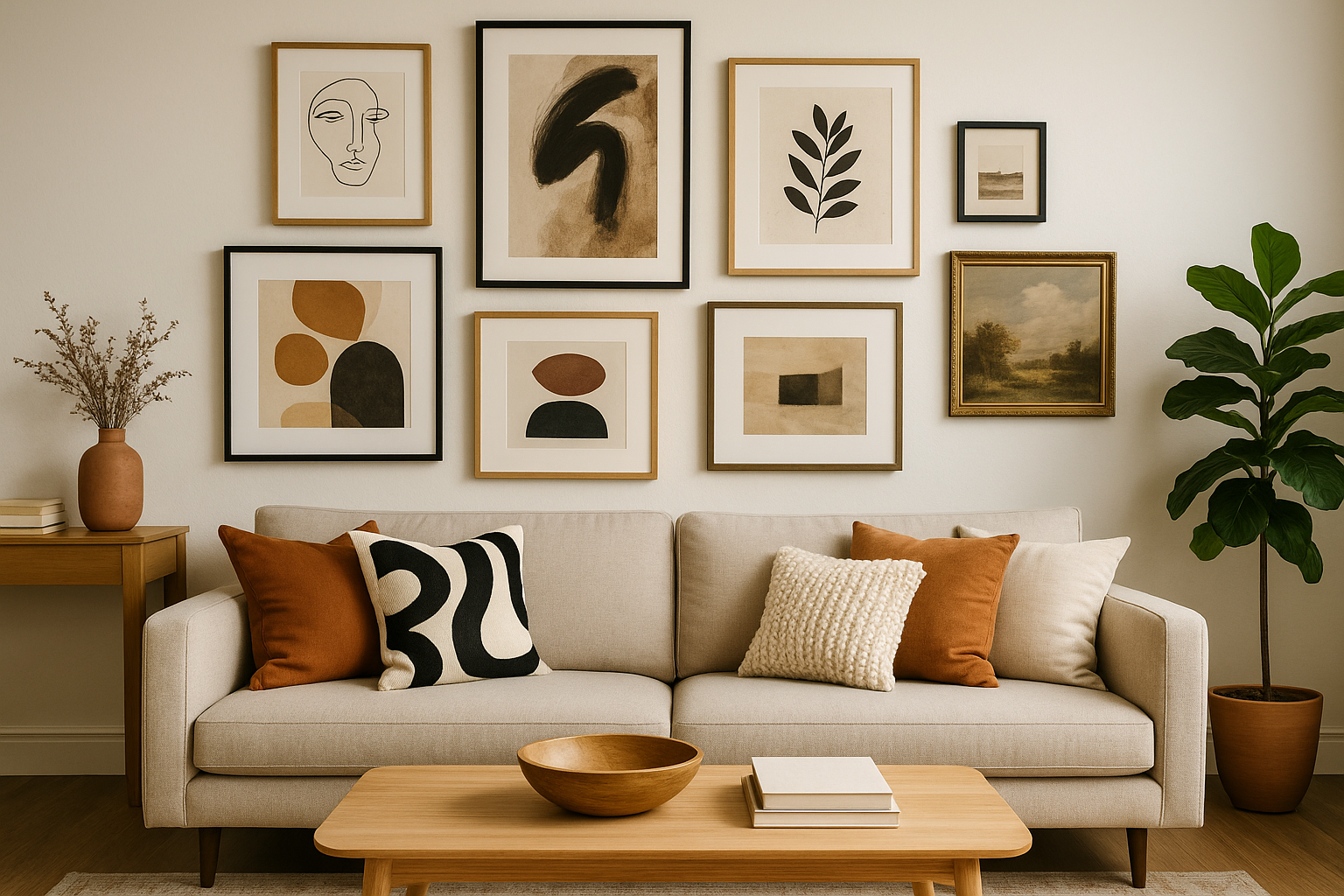
Art is one of the most powerful tools in interior design. It reflects your personality, adds color and emotion to a room, and turns a simple space into something truly memorable. But knowing how to choose, place, and hang art can feel overwhelming especially when you’re aiming for a professional, curated look.
In this article, you’ll learn how to choose art that speaks to you, how to position it for maximum impact, and how to make your home look like it was styled by a designer.
Choose Art That Resonates With You
Forget the idea that art needs to be expensive or famous. What matters most is that it speaks to you and fits the tone of your space.
Tips for choosing:
- Pick pieces that evoke emotion joy, calm, curiosity, nostalgia
- Consider subject matter: nature, abstract, portrait, architecture, typography
- Don’t limit yourself to paintings photography, textiles, digital prints, and mixed media all count
- Combine high and low: pair an original painting with a thrifted or DIY print
When in doubt, choose art you’d love even if it weren’t “on trend.” Your home should reflect you, not a showroom.
Match Art to Your Room’s Purpose
Each room in your home serves a different function and your artwork should align with that.
Suggestions by space:
- Living Room: Large pieces or a gallery wall that sparks conversation
- Bedroom: Soft, calming art landscapes, abstracts, neutral tones
- Dining Room: Bold, elegant, or themed art (e.g., food, wine, vintage prints)
- Home Office: Motivational or inspirational quotes, modern abstract pieces
- Bathroom: Small-scale prints, coastal themes, or minimalist sketches
- Kitchen: Playful prints, recipes, herbs, or still life
Use art to enhance the atmosphere, not overwhelm it.
Scale Matters: Pick the Right Size
The most common decorating mistake with art? Going too small. When choosing art, think big and scale it to the furniture or wall it’s on.
Guidelines:
- Art should cover about ⅔ to ¾ of the width of the furniture it hangs above
- For a sofa, the piece (or grouping) should span the majority of the width
- In narrow spaces like hallways, opt for vertical pieces or symmetrical pairs
- Use oversized art in small rooms it can actually make the space feel larger
If you’re unsure, measure and tape off the dimensions on your wall before hanging.
Consider Framing and Borders
The frame you choose can elevate or completely change the feel of your art.
Options:
- Matte black or white for clean, modern spaces
- Natural wood for warmth and casual interiors
- Gold or brass for traditional or elegant rooms
- No frame or floating frame for a contemporary look
Matting adds space and emphasis to smaller works, while canvas pieces can stand alone.
Curate a Gallery Wall
Gallery walls are a stylish way to group smaller pieces and showcase your personality. They’re perfect for staircases, entryways, hallways, or above beds and sofas.
Tips to curate like a pro:
- Choose a theme: color palette, black and white, travel, abstract, vintage, etc.
- Use consistent framing styles or intentionally mix them for an eclectic look
- Lay it out on the floor first or use paper templates on the wall to experiment
- Space pieces evenly (typically 2–3 inches apart)
- Include different sizes but balance the overall composition visually
Start with the central piece and build outward, adjusting spacing as needed.
Nail the Hanging Height
Hanging art at the wrong height is another common mistake. Here’s a simple rule:
- Eye level is best: The center of the artwork should be about 57–60 inches from the floor
- If hanging above furniture, leave about 6–8 inches between the frame and furniture top
- For gallery walls, treat the entire arrangement as a single unit and center accordingly
- In rooms with high ceilings, don’t be tempted to hang too high keep it human-scaled
Use a tape measure and level for precise placement. A few extra minutes makes all the difference.
Mix Media and Dimensions
Don’t limit yourself to flat, framed art. A well-curated wall might include:
- Sculptural elements or 3D wall art
- Woven baskets or macrame
- Mirrors or clocks
- Floating shelves with small objects or plants
- Tapestries, quilts, or wall hangings
Mixing media creates depth and intrigue. Just make sure everything relates in tone, color, or style.
Use Art to Create Balance
Art can solve visual imbalance in a room.
Examples:
- A bold piece of art can offset a heavy sofa
- A tall vertical piece draws the eye up in a low-ceilinged space
- A horizontal canvas stretches a narrow room visually
- Symmetrical pairs of artwork can bring calm to chaotic layouts
Use art like a design tool it can redirect focus, create rhythm, or fill negative space.
Rotate Art Over Time
Your taste evolves so can your art. Just like changing pillows or plants, rotating artwork keeps your space fresh.
Ideas:
- Swap art seasonally to match mood and color
- Change a gallery wall layout once a year
- Move a favorite piece from one room to another for a new perspective
- Add new finds gradually, curating over time
Art doesn’t have to be static. Let it grow with you.
Final Thoughts
Choosing and hanging art like a pro is part intuition, part planning. Start by selecting what you love, then focus on scale, balance, and placement. Whether you’re working with one statement piece or curating a gallery wall, the right artwork brings emotion, energy, and soul into your space.
Don’t wait until “everything else is done” to add art. It’s not the finishing touch it’s the touch that makes the space yours.