
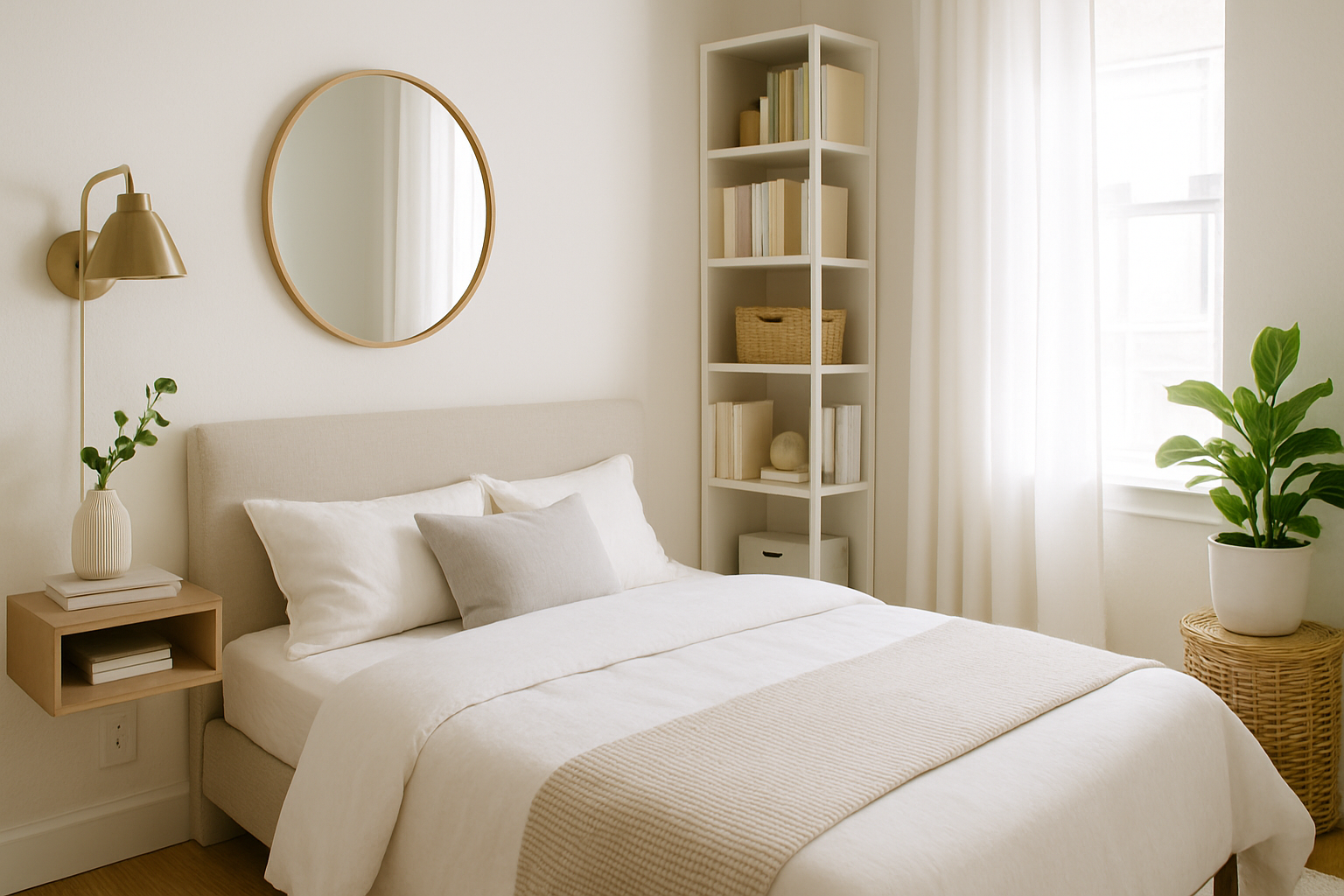
Small bedrooms may seem limiting, but with the right strategies, they can be transformed into functional, stylish, and cozy retreats. Whether you’re decorating a compact master bedroom, a guest room, or a studio apartment, thoughtful design and space-saving choices can make a big impact.
Here’s how to make the most of every square inch without sacrificing comfort or personality.
Choose a Light and Neutral Color Palette
Light colors create the illusion of space by reflecting more light. Opt for whites, soft greys, beiges, and pastels for walls, bedding, and large furniture.
Tips:
- Use different shades of the same color to add depth
- Add interest with subtle patterns or textures
- Use mirrors to reflect natural light and expand the visual space
Avoid dark or saturated wall colors unless used as a controlled accent.
Invest in Multipurpose Furniture
When space is limited, every piece of furniture should serve more than one function.
Smart choices:
- A bed with built-in drawers or under-bed storage bins
- A nightstand that doubles as a desk or vanity
- An ottoman with storage inside
- A wall-mounted fold-down desk
- A bench with hidden storage at the foot of the bed
These pieces reduce clutter while maximizing functionality.
Use Vertical Space
Look up—vertical space is often underused in small rooms.
Ideas:
- Install tall bookcases or shelving units
- Hang floating shelves above the bed or near the ceiling
- Mount wall hooks or pegboards for accessories, bags, or hats
- Use wall-mounted lighting to save nightstand space
Going vertical draws the eye upward, making the room feel taller and more open.
Opt for a Minimalist Bed Frame
Bulky headboards and thick bed frames take up precious space. Instead, choose:
- A platform bed with clean lines
- A low-profile frame that doesn’t overwhelm the room
- A bed without a footboard to allow for better flow
If you love the look of a headboard, try a fabric or wall-mounted version that doesn’t add physical bulk.
Keep Nightstands Slim and Practical
You don’t need matching nightstands or oversized tables. In fact, rethinking bedside storage can free up space.
Options:
- A floating nightstand
- A slim ladder shelf
- A wall-mounted shelf with a clip-on light
- A stack of books or small stool as an alternative table
Keep only essentials beside the bed to reduce visual clutter.
Choose the Right Storage Solutions
Organization is key in a small bedroom. Use a mix of hidden and open storage to maintain order.
Tips:
- Use under-bed storage boxes with wheels
- Hang closet organizers for shoes, scarves, or seasonal items
- Use drawer dividers to keep clothing tidy
- Add hooks behind doors for bags, robes, or accessories
Try to keep visible storage in matching containers for a clean look.
Use Mirrors Strategically
Mirrors reflect light and give the illusion of more space—ideal for small bedrooms.
Ideas:
- Hang a large mirror opposite a window
- Use a floor mirror leaned against the wall
- Add mirrored closet doors
- Use a mirrored tray on the dresser to reflect decorative elements
Choose a frame that matches your decor for cohesion.
Maximize Natural Light
Avoid heavy curtains that block light. Let the sunshine in to visually expand the room.
Tips:
- Use sheer or light-filtering curtains
- Hang curtains closer to the ceiling and let them drop to the floor to add height
- Avoid placing large furniture in front of windows
If you need privacy, try blinds or frosted window film for minimal obstruction.
Keep Decor Simple and Cohesive
Small rooms benefit from less visual noise. Stick to a few curated decor items that reflect your personality without overwhelming the space.
Tips:
- Choose artwork that complements your palette and hangs vertically
- Use symmetry to create balance and calm
- Select coordinated bedding in subtle textures
- Add plants for a fresh and lively touch without taking up too much space
Use decorative objects that are meaningful and intentional.
Create a Sense of Separation in Shared Spaces
If your small bedroom doubles as a workspace or lounge, create clear zones.
Ideas:
- Use a folding screen or curtain to divide areas
- Place a rug to define the bed area
- Choose furniture with clear functions (e.g., a daybed for sitting and sleeping)
- Use lighting to visually separate spaces (a reading lamp vs. a desk lamp)
Zoning creates structure even in limited square footage.
Keep Floors Clear
A cluttered floor makes a room feel cramped. The more you can see of the floor, the more spacious your room will feel.
Tips:
- Use wall-mounted or hanging storage
- Avoid furniture with solid bases that touch the ground
- Go for raised furniture with legs to expose more floor area
Keeping things off the floor also makes cleaning easier and faster.
Use a Statement Piece (But Only One)
A single bold item gives your room character without cluttering it.
Ideas:
- A large piece of art over the bed
- A bold headboard or statement pillow
- A unique rug with pattern or color
Let the statement piece shine by keeping everything else minimal.
Final Thoughts: Small Space, Big Comfort
A small bedroom doesn’t have to feel cramped or chaotic. With smart furniture choices, cohesive color palettes, vertical storage, and thoughtful design, you can turn even the tiniest room into a beautiful and restful sanctuary.
Remember: it’s not about how much space you have—it’s about how well you use it. Prioritize comfort, function, and a touch of personal style, and your small bedroom will feel just right.