
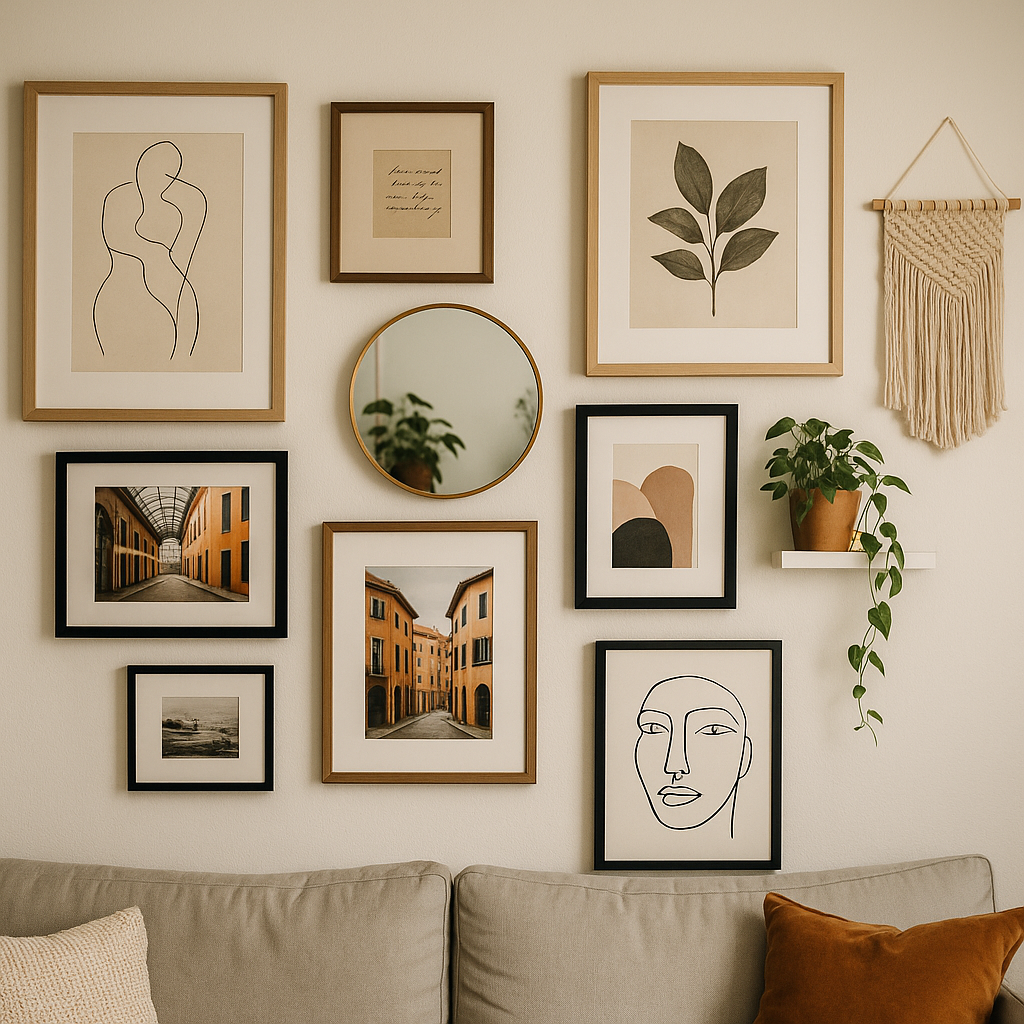
A gallery wall is more than just an interior design trend—it’s a way to tell your story, express your personality, and bring life to any blank space. Whether you’re decorating your first apartment or refreshing a room in your home, a well-designed gallery wall adds warmth, creativity, and conversation-starting charm.
But how do you go beyond a collection of random frames and create a cohesive display that feels intentional and unique? In this guide, you’ll learn how to design a gallery wall that truly reflects who you are—while enhancing the look and feel of your space.
Choose the Right Wall for Impact
The first step to creating a gallery wall that works is selecting the right location. The wall should be large enough to support the layout but not so wide that the art feels lost or scattered.
Great places for a gallery wall:
- Above a sofa or sectional
- Along a staircase
- Over a bed or headboard
- In a hallway or entryway
- Behind a dining table
- Around a TV (to minimize its visual weight)
The wall you choose should already be a natural visual focus or have enough space to become one.
Decide on a Theme or Story
The most memorable gallery walls are those that have a unifying thread—whether it’s a color palette, a subject matter, a memory, or a feeling.
Theme ideas:
- Travel photos from places you’ve visited
- Black-and-white family portraits
- Art prints in a single color palette
- Botanical or nature-themed illustrations
- A mix of quotes, typography, and imagery that reflect your values
- Childhood drawings or your own creative work
Your gallery wall should feel personal, not just decorative. Think of it as a visual diary.
Choose a Layout Style
There are several popular gallery wall layouts, each with its own vibe. Choosing a layout ahead of time will make planning and hanging much easier.
Common layouts:
- Grid: Equal-sized frames arranged in rows and columns for a clean, modern look
- Linear: Aligned along a single line—either top, center, or bottom—for simplicity
- Organic: Freely arranged frames in various sizes and orientations for a casual, artistic feel
- Symmetrical: A central anchor piece with mirrored balance on both sides
- Salon-style: A dense, eclectic mix that fills an entire wall, often from floor to ceiling
If you’re unsure which suits your space, lay out your art on the floor and experiment until it feels right.
Mix Sizes and Shapes Intentionally
A great gallery wall plays with scale. Mixing large and small frames creates rhythm and interest.
Tips for mixing frame sizes:
- Use 1–2 large anchor pieces to ground the arrangement
- Fill in with medium and small pieces to add texture
- Balance the visual weight on each side of the wall
- Mix portrait and landscape orientations for variety
- Keep spacing consistent (2–3 inches between frames is ideal)
You can also include round or uniquely shaped items—like mirrors, clocks, or wall sculptures—to break up the grid and add dimension.
Select Frames that Complement Each Other
Your frames don’t need to match exactly, but they should work together visually. Aim for consistency in tone, material, or finish.
Ideas:
- All black or all white frames for a modern, uniform look
- Wooden frames in various stains for warmth and depth
- A mix of metallic finishes (like brass and gold) for a luxe effect
- Eclectic frames in different colors for a boho or artistic feel
Consider using the same matting color in different frames to create cohesion even with varied shapes or textures.
Incorporate Different Media
Gallery walls become even more engaging when you include a mix of textures and materials.
Try adding:
- Framed textiles (fabric swatches, embroidery, or vintage scarves)
- Shadow boxes with 3D objects (souvenirs, heirlooms, keepsakes)
- Wall planters or small shelves with greenery
- Metal or wooden letters to spell out a word
- Canvas art alongside traditional framed pieces
These layers make your wall more tactile, dynamic, and truly unique.
Use Templates or Paper Cutouts to Plan
Before making any holes in the wall, plan your arrangement using paper cutouts in the same sizes as your frames.
Steps:
- Cut out newspaper or kraft paper templates of your artwork
- Use painter’s tape to stick them to the wall in your chosen layout
- Adjust spacing and placement as needed
- Mark the exact nail or hook positions once you’re satisfied
This low-stress method ensures symmetry, balance, and avoids unwanted mistakes.
Hang with the Right Tools
When it’s time to hang your gallery wall, use tools that won’t damage your space (especially important for renters).
Options:
- Command strips or damage-free hooks for lightweight frames
- Picture-hanging wire and nails for heavier pieces
- A level or laser level to keep frames aligned
- A tape measure or spacing guide for consistency
Start with your anchor pieces first, then build around them.
Add Lighting to Elevate the Display
To make your gallery wall even more impactful, consider how it’s lit. Proper lighting highlights the artwork and makes it feel like a curated part of your home.
Lighting ideas:
- Picture lights mounted above or on top of the frames
- LED strip lights behind floating shelves or frames
- A nearby sconce or adjustable wall lamp
- Natural light from a nearby window (but avoid direct sun on art)
Even basic lighting improvements can add depth and warmth.
Update and Rotate Art Over Time
A gallery wall doesn’t need to be permanent. In fact, one of the best things about it is that it can evolve.
Ways to update:
- Swap out seasonal or themed pieces
- Replace art with new prints or photos over time
- Add more pieces to expand your wall as your collection grows
- Remove and refresh elements to keep it feeling current
This flexibility allows your space to grow and change with you.
Final Thoughts
A well-designed gallery wall is more than just art it’s an expression of who you are. It reflects your travels, your interests, your memories, and your creativity.
By mixing size, texture, and layout with intention, you can create a wall that looks beautifully styled yet deeply personal. Whether you go minimalist, eclectic, or classic, the most important thing is that your gallery wall tells a story your story.