
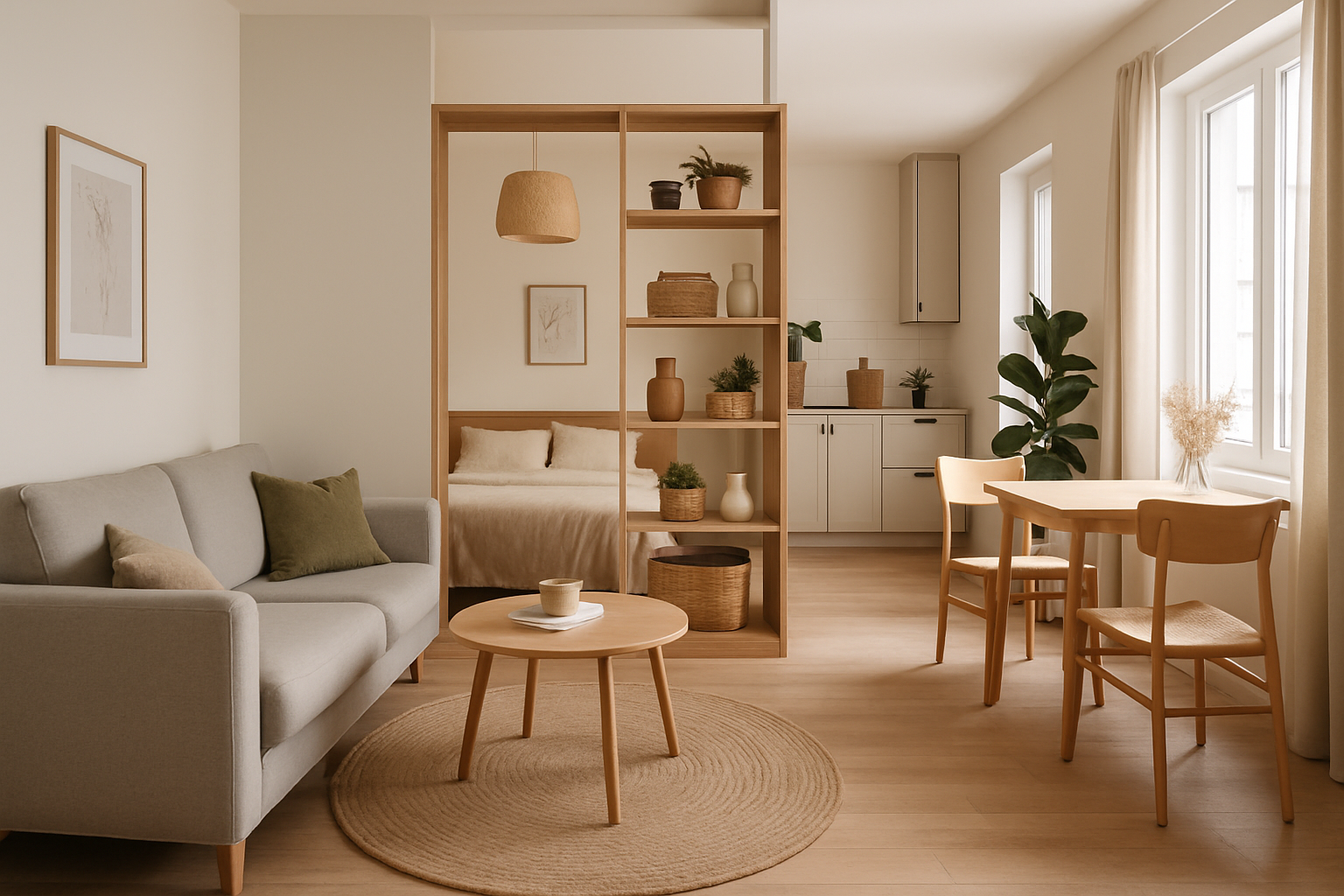
Living in a small apartment doesn’t mean you have to sacrifice organization or style. In fact, with a little creativity and smart planning, you can divide your space into functional zones that each serve a unique purpose without using walls or doors.
Whether you live in a studio or a compact one-bedroom, this article will guide you through practical and stylish ways to create well-defined zones that make your apartment feel larger, more organized, and truly livable.
Why Zoning Matters
In a small space, every inch counts. Without zoning, your apartment can quickly feel like one big multipurpose room. Zoning helps by:
- Giving each activity (sleeping, working, eating, relaxing) its own space
- Creating visual order and separation
- Maximizing functionality
- Making the apartment feel larger and more thoughtful
Zoning is less about square footage and more about smart layout and design.
Use Rugs to Define Spaces
Rugs are one of the simplest and most effective tools for zoning in open layouts. They visually anchor furniture and help separate one area from another.
Ideas:
- Place a large rug under the bed to define the sleeping area
- Use a different rug to separate the living or TV area
- Add a runner or small rug near the kitchen or entryway
- Vary textures and colors to subtly mark boundaries
Rugs instantly communicate, “This space serves a specific purpose.”
Position Furniture as Dividers
Your furniture isn’t just functional it’s a built-in tool for division. Arrange it in a way that separates zones without needing extra construction.
Examples:
- Place the back of the sofa toward your bed to define the living room
- Use a tall bookshelf or open shelving unit between the bedroom and living space
- Angle chairs or a desk to create distinct working areas
- Use a bench, console table, or bar cart as a subtle partition
Furniture doubles as space-defining architecture when positioned strategically.
Use Curtains or Screens
If you’re looking for more privacy between zones (like separating your bed from the living area), fabric dividers can do wonders.
Ideas:
- Hang curtains from a ceiling track or tension rod to create a room-like feel
- Use a folding screen for flexibility and decorative flair
- Install a lightweight panel or fabric drape in a studio apartment
- Choose sheer fabrics for light flow or heavy curtains for more separation
These options allow you to “close off” an area without building a wall.
Create Visual Changes With Color or Art
Even without physical barriers, visual cues can separate zones. Using different color palettes or types of decor in each area gives each space its own identity.
Suggestions:
- Paint one wall a different color in the sleeping or dining zone
- Hang art that’s unique to each area (modern prints in the office, calming landscapes in the bedroom)
- Use distinct lighting styles like a pendant light in the dining area and a floor lamp in the living room
- Try peel-and-stick wallpaper to visually divide a space
These changes help the brain recognize boundaries, even in open layouts.
Maximize Vertical Space
In small apartments, vertical space is your best friend. Tall furniture and vertical storage help separate zones and reduce clutter.
Vertical tips:
- Use a tall bookcase as a divider or storage unit
- Hang wall-mounted shelves or floating cabinets between zones
- Install wall hooks or pegboards near entryways or workspaces
- Use a tall headboard or canopy bed to define the sleeping area
Tall, slim solutions help define areas without crowding the room.
Use Lighting to Highlight Zones
Lighting can be used not just for function, but for ambiance and zoning.
Ideas:
- A pendant lamp over the dining table defines the eating area
- A desk lamp marks a workspace
- String lights or a dimmable floor lamp soften the sleeping zone
- LED strips under cabinets or shelves add distinction
Layered lighting separates spaces while enhancing mood and depth.
Designate Zones With Purposeful Furniture
In small apartments, multifunctional furniture often serves as the cornerstone of each zone.
Smart furniture examples:
- A desk and chair tucked in a corner for a dedicated office
- A storage bench near the door for a practical entryway
- A bar-height table to separate kitchen and dining areas
- A media console that anchors the TV zone and provides storage
Each piece of furniture should signal what the space is intended for.
Keep Each Zone Tidy
Zoning only works if each area stays organized. Clutter blurs the lines between zones and reduces efficiency.
Tips:
- Use storage baskets or bins that match your decor
- Assign specific storage for each zone (bedside, office, kitchen, etc.)
- Declutter regularly and return items to their designated space
- Avoid letting one zone “spill over” into another especially in studios
Maintaining clear boundaries keeps your apartment feeling orderly and spacious.
Final Thoughts
Zoning in a small apartment isn’t about creating walls it’s about creating flow, function, and identity within a compact footprint. With thoughtful furniture placement, visual dividers, smart storage, and a bit of creativity, you can make every square foot work hard and look great.
Your space may be small, but when it’s well-zoned, it can support every part of your lifestyle from work and rest to relaxation and creativity.