
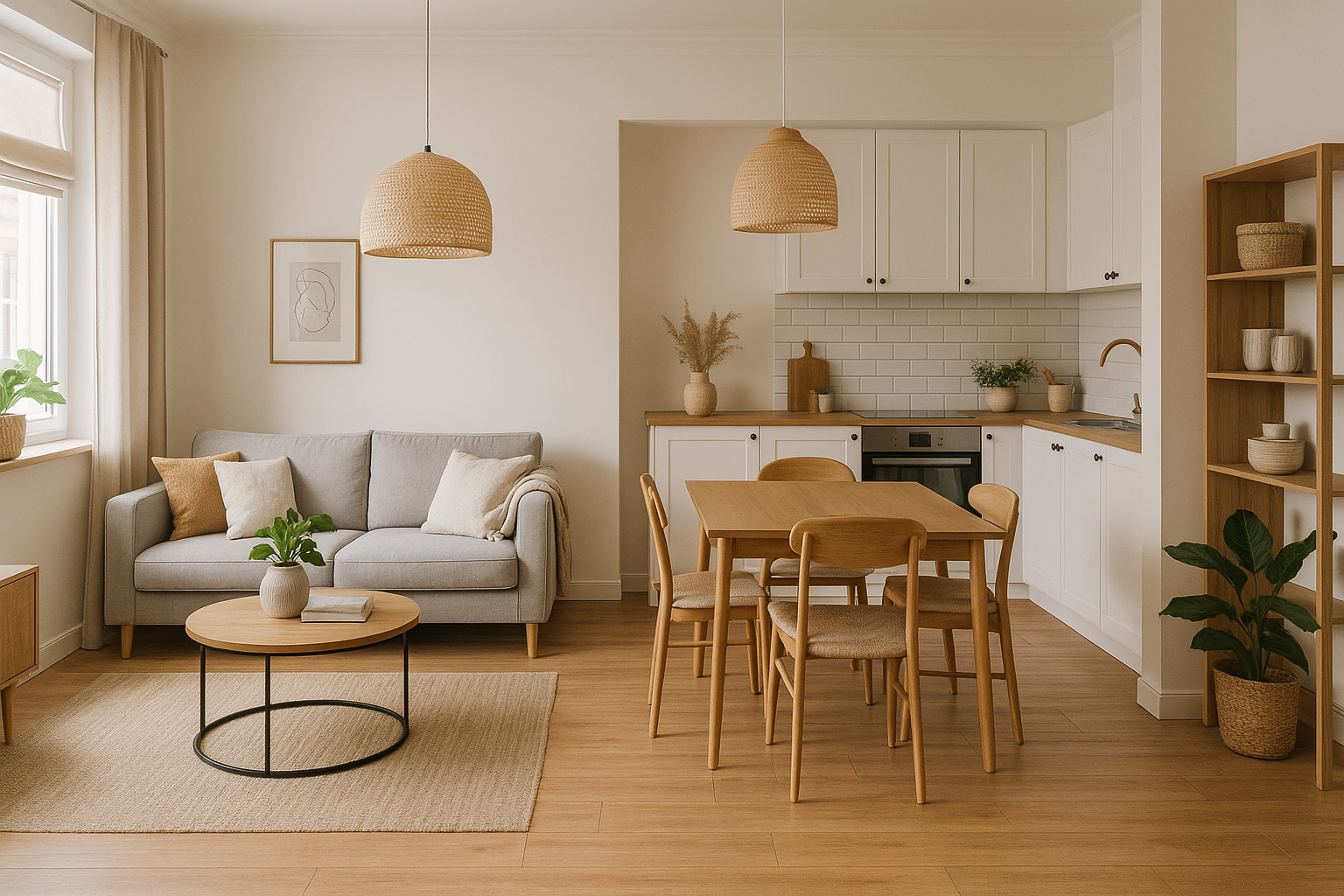
Open-plan living has become one of the most popular interior design layouts and for good reason. By removing walls and blending spaces like the kitchen, dining room, and living area, you create a more social, spacious, and flexible environment. But without proper planning, open spaces can feel chaotic, cluttered, or cold.
In this article, we’ll reveal the secrets to designing an open-plan living area that’s not only functional but also stylish, cohesive, and welcoming.
Define Zones Without Walls
In an open-plan space, defining distinct zones is key. Without walls to guide the layout, you’ll need visual and physical cues to separate areas for cooking, dining, lounging, or working.
Tips to create zones:
- Use rugs to anchor furniture groupings (e.g., a rug under the sofa, another under the dining table)
- Change lighting styles in each area (a pendant over the dining table, a floor lamp near the sofa)
- Use furniture placement to create boundaries (like a sofa back separating the living area from the kitchen)
- Add subtle room dividers like open shelving units or a console table
These boundaries help the space feel organized and purposeful.
Choose a Cohesive Color Palette
Because all areas are visible at once, choosing a consistent color palette helps unify the entire space and create visual harmony.
Suggestions:
- Start with 2–3 base colors and use them throughout all zones
- Add accent colors in smaller doses (like throw pillows, bar stools, or dining chairs)
- Stick to complementary tones in rugs, furniture, and artwork
- Avoid using wildly different color schemes in each area they’ll clash visually
A cohesive palette ties the room together while still allowing individual zones to shine.
Layer Lighting Strategically
Lighting in open-plan spaces needs to be layered and functional. You’ll want to create mood, visibility, and task lighting for different purposes.
Use three levels of lighting:
- Ambient: General light for the whole space (e.g., ceiling lights, recessed lighting)
- Task: Focused light for activities like cooking or reading (e.g., pendant lights, under-cabinet lights)
- Accent: Decorative or mood-setting light (e.g., wall sconces, table lamps, or LED strips)
Dimmer switches are especially useful they let you adjust the vibe depending on time of day or occasion.
Mix Materials for Warmth and Contrast
One risk with open-plan layouts is a lack of variation. To avoid monotony, mix different materials and finishes to add interest and balance.
Material mix ideas:
- Pair a sleek stone kitchen island with warm wood floors
- Combine metal accents (like light fixtures) with plush textiles (like velvet or wool)
- Use natural materials like jute, rattan, and linen to soften modern surfaces
- Add reflective surfaces like mirrors or glass to expand the sense of space
Contrast keeps the open space dynamic and layered, rather than flat or sterile.
Maintain Visual Flow
Even with defined zones, everything in an open-plan space needs to flow well together. This includes layout, sightlines, and traffic paths.
Flow tips:
- Avoid blocking walkways with large furniture
- Leave enough space between zones for natural movement
- Align furniture for easy conversation and views (e.g., don’t turn your back to the dining area if you don’t have to)
- Use consistent flooring across the space to avoid visual “choppiness”
Good flow ensures your space is both functional and pleasant to navigate.
Create a Focal Point in Each Zone
Each section of your open-plan layout should have its own visual anchor. This helps the space feel structured and visually appealing.
Focal point examples:
- A fireplace or large artwork in the living area
- A striking pendant light above the dining table
- A statement backsplash or island in the kitchen
- A view through large windows or an architectural detail
Anchor each zone with one strong feature so it feels intentional and balanced.
Keep Clutter in Check
One of the biggest challenges in open-plan living is clutter because there’s nowhere to hide it. Everything is in view.
Tips for managing clutter:
- Use closed storage wherever possible (cabinets, baskets, sideboards)
- Incorporate stylish storage like ottomans with hidden compartments
- Create a drop zone near the entryway for shoes, bags, and keys
- Keep counters as clear as possible, especially in the kitchen
A clutter-free space feels bigger, calmer, and more cohesive.
Add Texture and Softness
Large open rooms can sometimes feel cold or echoey. Soften them with texture, textiles, and cozy details.
Ideas:
- Use layered rugs and curtains to absorb sound and add warmth
- Add throw pillows and blankets in varied textures
- Incorporate upholstered furniture to balance harder surfaces
- Use natural decor like wood, leather, ceramics, or dried florals
Texture brings intimacy and comfort to large, open spaces.
Personalize Each Section
Even in an open plan, you can express your style in each zone. Let your personality shine through art, decor, and objects you love.
Suggestions:
- Hang different art styles in each area while sticking to a shared color theme
- Use a curated collection of books, plants, or ceramics
- Decorate shelves or mantels with a mix of personal and design-forward items
- Incorporate handmade or vintage pieces to add soul
The space may be open, but it should still feel like you.
Final Thoughts
A beautiful open-plan living area doesn’t just happen it’s thoughtfully designed to balance flow, function, and style. By creating clear zones, choosing a cohesive palette, layering materials, and staying organized, you can make the most of your open space.
It’s not about filling every corner it’s about connecting each section in a way that feels intentional, welcoming, and distinctly yours.