
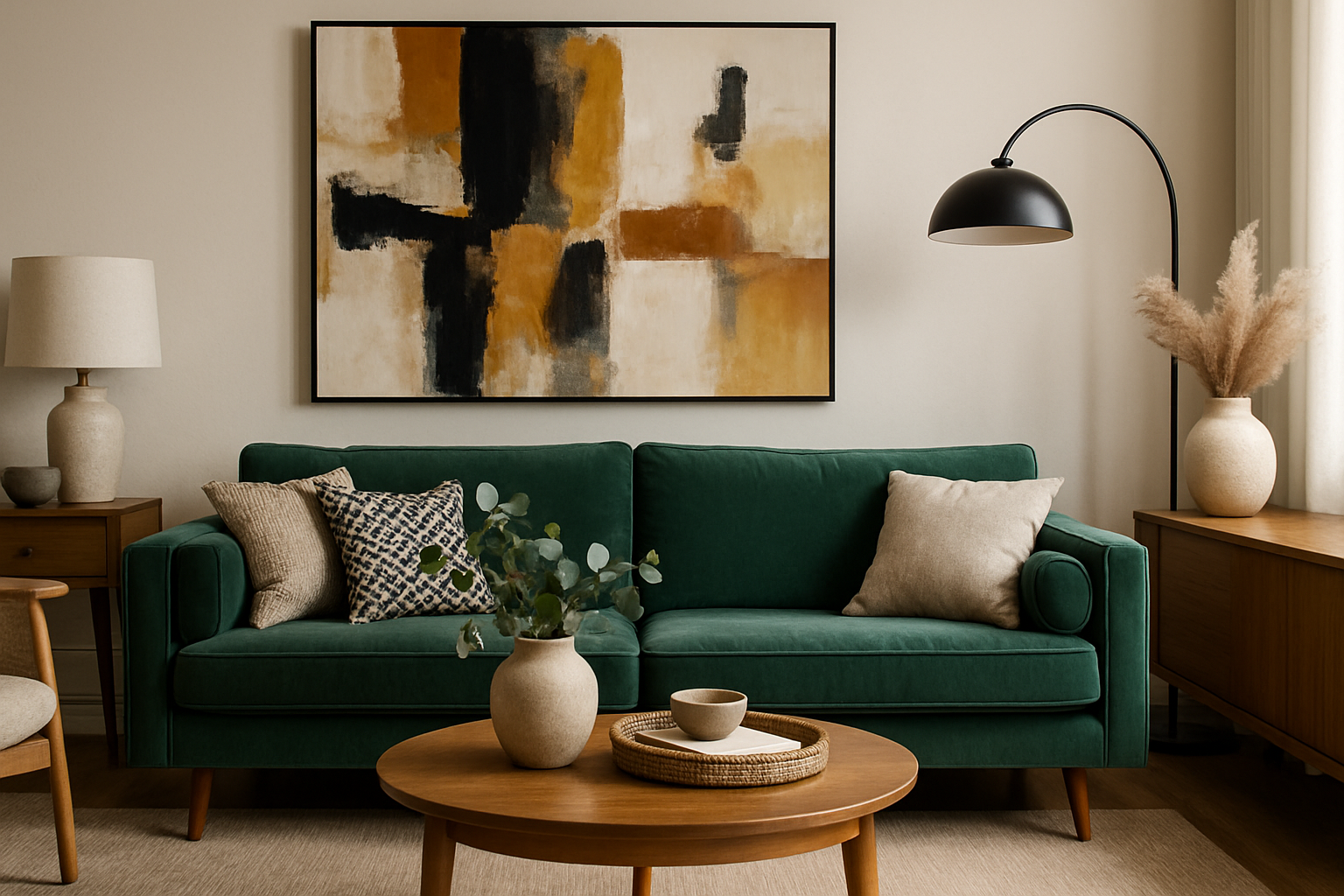
A statement piece is that one bold, eye-catching item in a room that instantly draws attention. Whether it’s an oversized piece of art, a vibrant sofa, a sculptural light fixture, or a vintage cabinet, a statement piece sets the tone for the entire space.
But once you have that showstopper, how do you style the rest of the room without competing with it or worse, letting everything else fade away?
In this article, you’ll learn how to decorate around a statement piece in a way that complements, balances, and elevates your entire room.
Identify the Star of the Room
Before you start styling, be clear about what your statement piece is. This could be:
- A colorful velvet sofa
- A dramatic chandelier or pendant light
- A large-scale piece of art or gallery wall
- A patterned area rug
- A bold wallpapered accent wall
- A sculptural chair or table
Whatever it is, your statement piece should be the first thing you see when entering the room—and it should tell a story about your style.
Build the Color Palette Around It
Once you’ve chosen the focal item, use it as the anchor for your color scheme.
Tips:
- Pull accent colors from the statement piece and repeat them in smaller ways throughout the space
- If your statement piece is brightly colored, keep the rest of the room more neutral
- Use complementary tones in decor, textiles, or wall paint
- Balance the palette by adding subtle variations in texture and finish
Let your showstopper set the tone while the rest of the room supports it.
Balance Proportions
To avoid visual imbalance, consider how the statement piece relates to the size and scale of the room.
Guidelines:
- Pair an oversized sofa with large-scale art or a tall bookshelf
- If your focal point is a low-profile item (like a rug), balance it with height from floor lamps or tall plants
- Avoid clustering multiple large items in one corner distribute visual weight across the room
- Don’t overcrowd the statement piece give it space to breathe
Scale and proportion help maintain flow and prevent your room from feeling too heavy or chaotic.
Create Negative Space Around It
One of the biggest mistakes people make is crowding a statement piece with too many accessories. Minimal surrounding decor allows your focal point to shine.
Suggestions:
- Leave blank wall space around bold artwork or mirrors
- Use neutral, low-profile side tables next to a dramatic sofa
- Avoid busy patterns or textures that compete for attention
- Let open space act as a visual “pause” between elements
The eye needs rest to fully appreciate your centerpiece.
Echo Shapes and Materials
To create cohesion, pick up on subtle elements from your statement piece and echo them throughout the room.
Examples:
- If you have a round mirror, incorporate circular elements in table lamps or side tables
- Repeat the material of a sculptural chair (e.g., brass or rattan) in smaller details like frames or hardware
- If your focal item is angular or architectural, use geometric patterns in rugs or pillows
Repetition builds harmony without diluting the drama.
Layer with Softer or Complementary Textures
Use contrasting materials to support but not compete with your statement piece.
Ideas:
- Pair a sleek metal light fixture with soft linen curtains
- Balance a bold leather sofa with a plush rug or knit throw
- Use matte finishes to ground glossy or high-shine accents
- Add natural textures like wood or stone to calm a colorful or patterned statement
Layering texture adds depth and visual interest without overpowering the main feature.
Consider Sightlines and Layout
Think about how people will view your statement piece from different angles.
Tips:
- Make sure it’s visible from key entry points or gathering areas
- Position furniture to draw the eye toward the focal item
- Use lighting to highlight it (a spotlight on art or pendant above a table)
- Avoid blocking it with tall furniture or cluttered decor
Your layout should lead the eye naturally toward the centerpiece.
Let Lighting Enhance the Focus
Lighting can make or break your statement moment.
Use it to:
- Highlight artwork with picture lights or wall-mounted sconces
- Showcase architectural elements with uplighting or recessed lights
- Draw attention to sculptural pieces with directional spotlights
- Create ambiance around a dramatic pendant with dimmable lighting
Proper lighting transforms your statement piece into a true showpiece.
Keep Supporting Pieces Simple and Intentional
Everything else in the room should serve a purpose and not distract from your focal point.
Tips:
- Choose neutral or subdued colors for secondary furniture
- Use clean lines and timeless silhouettes
- Keep decor functional and minimal
- Stick to a consistent style (e.g., modern, rustic, eclectic) to support the overall theme
Think of the room as a stage: your statement piece is the star, and everything else is the set design.
Final Thoughts
A statement piece is your opportunity to express bold personality and make your space memorable. By building your room around it with thoughtful design choices like balanced color, clean layout, intentional repetition, and curated simplicity you ensure your home feels elevated, intentional, and unique.
Let your statement speak loud and clear then let the rest of the room quietly cheer it on.