
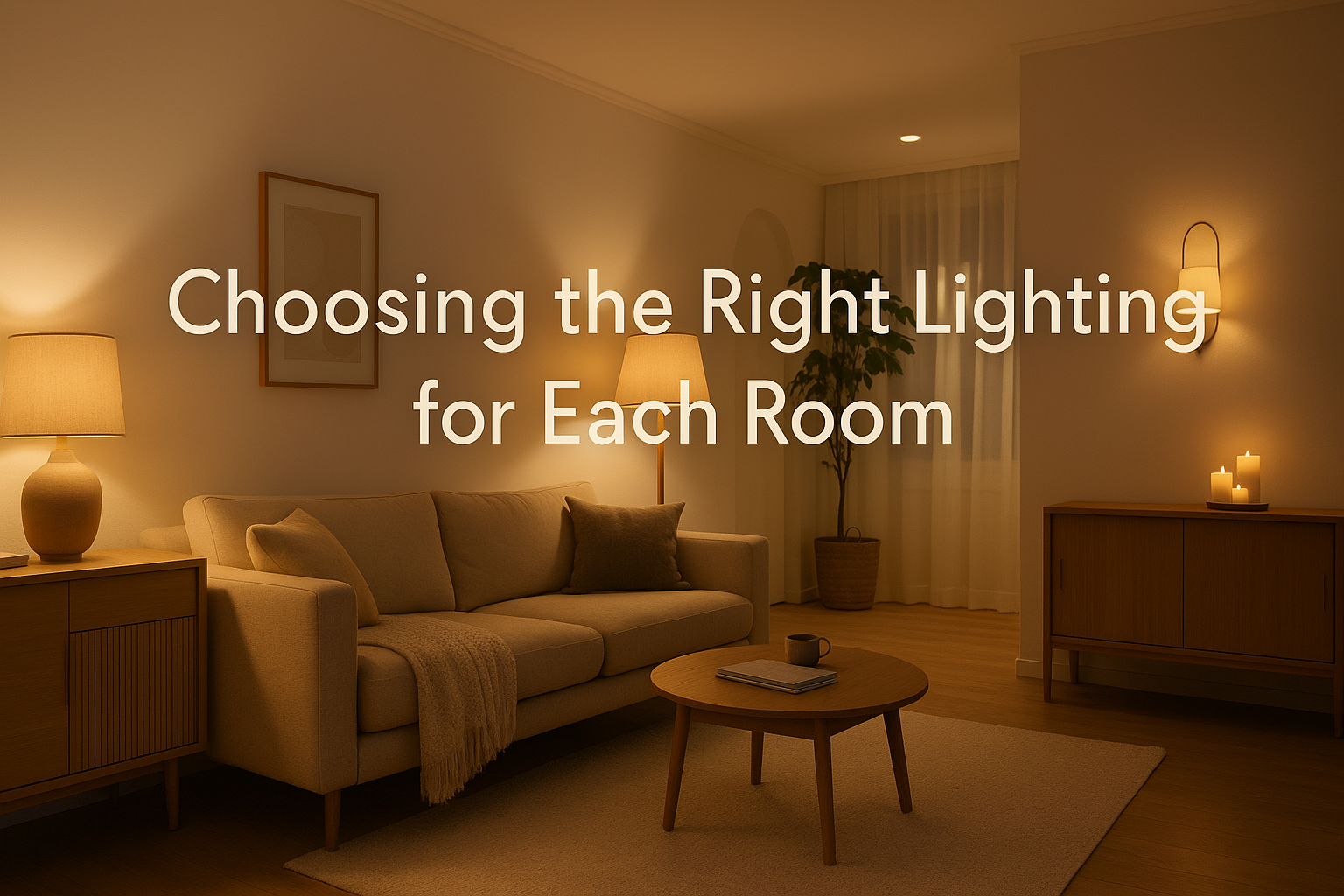
Lighting is one of the most powerful design elements in your home. It affects the mood, functionality, and appearance of every space. Whether you’re designing a cozy bedroom or a productive home office, choosing the right lighting transforms how each room looks and feels.
This guide will help you select the ideal lighting type, temperature, and layout for every room in your home creating spaces that are both beautiful and practical.
Understand the Three Layers of Lighting
Before diving into room-by-room tips, it’s important to understand the three types of lighting every well-lit space should include:
- Ambient lighting: The general light that fills a room usually from overhead fixtures. It sets the overall tone and provides basic visibility.
- Task lighting: Focused light used for specific activities like reading, cooking, or working. Often found in desk lamps, under-cabinet lighting, or vanity lights.
- Accent lighting: Decorative lighting that highlights architectural features, artwork, or creates mood. Includes wall sconces, uplighting, LED strips, or candles.
Layering all three types creates a dynamic and flexible lighting environment.
Living Room: Versatile and Comfortable
The living room serves multiple purposes—relaxing, entertaining, reading, or watching TV. Your lighting should reflect that flexibility.
Best choices:
- A central ceiling fixture for ambient light (chandelier, flush mount, or pendant)
- Table and floor lamps near seating areas for reading and mood
- Wall sconces or LED strips for accent lighting around shelves or artwork
Tips:
- Use dimmers on overhead lights to adjust brightness throughout the day
- Choose warm bulbs (2700K–3000K) for a cozy, inviting feel
- Avoid placing lighting directly behind TVs to reduce glare
Kitchen: Bright and Functional
Kitchen lighting should prioritize visibility and functionality, especially in food prep areas.
Best choices:
- Recessed lighting or flush mounts for even, ambient lighting
- Under-cabinet lighting to brighten countertops
- Pendant lights over islands or dining nooks
Tips:
- Choose bright, neutral white light (3500K–4000K) for clarity
- Install task lights over the stove, sink, and prep zones
- Consider adjustable pendant lights for both style and function
Dining Room: Warm and Welcoming
Lighting in the dining room sets the tone for meals and gatherings. It should be centered, flattering, and dimmable.
Best choices:
- A chandelier or pendant light directly above the dining table
- Wall sconces or candles for soft ambient glow
- Accent lighting in cabinets or shelves if you display decor
Tips:
- Install dimmer switches to shift from bright dinners to relaxed evenings
- Hang lighting 30–36 inches above the table for ideal proportions
- Choose warm-toned bulbs (around 2700K) for flattering illumination
Bedroom: Soft and Soothing
Your bedroom should be a restful retreat, and lighting plays a major role in creating that calm atmosphere.
Best choices:
- Overhead lighting with a dimmer or ceiling fan with light
- Bedside table lamps or wall-mounted sconces for reading
- LED strip lights under the bed or behind the headboard for subtle ambiance
Tips:
- Opt for warm bulbs (2700K) to promote relaxation and melatonin production
- Avoid harsh white lights or direct overhead fixtures as your primary source
- Consider smart bulbs or app-controlled lighting for convenience and automation
Bathroom: Bright and Balanced
Bathrooms need clear, functional lighting for grooming but also benefit from softer tones for relaxing baths or nighttime visits.
Best choices:
- Vanity lights on both sides of the mirror (or above it) to avoid shadows
- Overhead recessed lighting for general illumination
- Accent lighting around the tub or under the vanity
Tips:
- Use neutral white bulbs (3500K–4000K) for grooming accuracy
- Install dimmable or night-light options for late-night use
- Avoid placing bulbs directly above the mirror—they cast unflattering shadows
Home Office: Bright and Productive
Good lighting in your workspace reduces eye strain and boosts focus, especially for those who work remotely.
Best choices:
- Overhead ambient lighting to evenly light the room
- Adjustable desk lamp for task lighting
- Natural light from a nearby window (ideally to the side of your desk)
Tips:
- Use cooler white light (4000K–5000K) to stay alert and focused
- Position your desk so light doesn’t cause screen glare
- Consider a ring light or monitor light bar for video calls
Entryway and Hallways: Safe and Stylish
These often-overlooked areas benefit from functional yet decorative lighting.
Best choices:
- Flush mount or semi-flush ceiling lights for general illumination
- Wall sconces for added style and soft lighting
- Accent lighting on artwork or architectural features
Tips:
- Use motion sensors or timers for convenience and energy efficiency
- Choose bulbs that match the rest of the home’s color temperature
- In narrow hallways, use mirrors to reflect and amplify light
Kids’ Rooms: Fun and Functional
Lighting in children’s rooms should be safe, adjustable, and encourage both play and sleep.
Best choices:
- Overhead ceiling lights with soft diffusion
- Night lights or wall sconces for nighttime comfort
- Clip-on or desk lamps for homework and crafts
Tips:
- Use dimmable bulbs or smart bulbs with color options
- Add playful lamps or character-themed lighting
- Keep cords tucked away for safety
Outdoor Spaces: Safe and Inviting
Outdoor lighting enhances curb appeal, improves safety, and allows you to enjoy patios or balconies after dark.
Best choices:
- Path lights for walkways
- Wall-mounted lanterns by doors and garage
- String lights or lanterns for ambiance on patios
Tips:
- Use warm LED bulbs for inviting glow
- Install solar-powered lights for energy efficiency
- Add motion-activated lights in dark corners or entryways
Bulb Types and Temperature Guide
Here’s a quick reference for choosing the right bulb temperature (measured in Kelvin):
- 2700K–3000K (Warm White): Living rooms, bedrooms, dining rooms
- 3500K–4000K (Neutral White): Kitchens, bathrooms, offices
- 5000K+ (Cool White/Daylight): Garages, laundry rooms, task lighting
Always choose LED bulbs for longer life and lower energy use.
Final Thoughts: Light with Intention
Lighting is more than just function—it’s a design statement, a mood setter, and an essential element of comfort. When chosen thoughtfully, lighting highlights your style, enhances your home’s purpose, and turns ordinary spaces into something extraordinary.
By layering ambient, task, and accent lighting, and tailoring each room to its unique needs, you’ll create a home that looks and feels its best, day or night.