
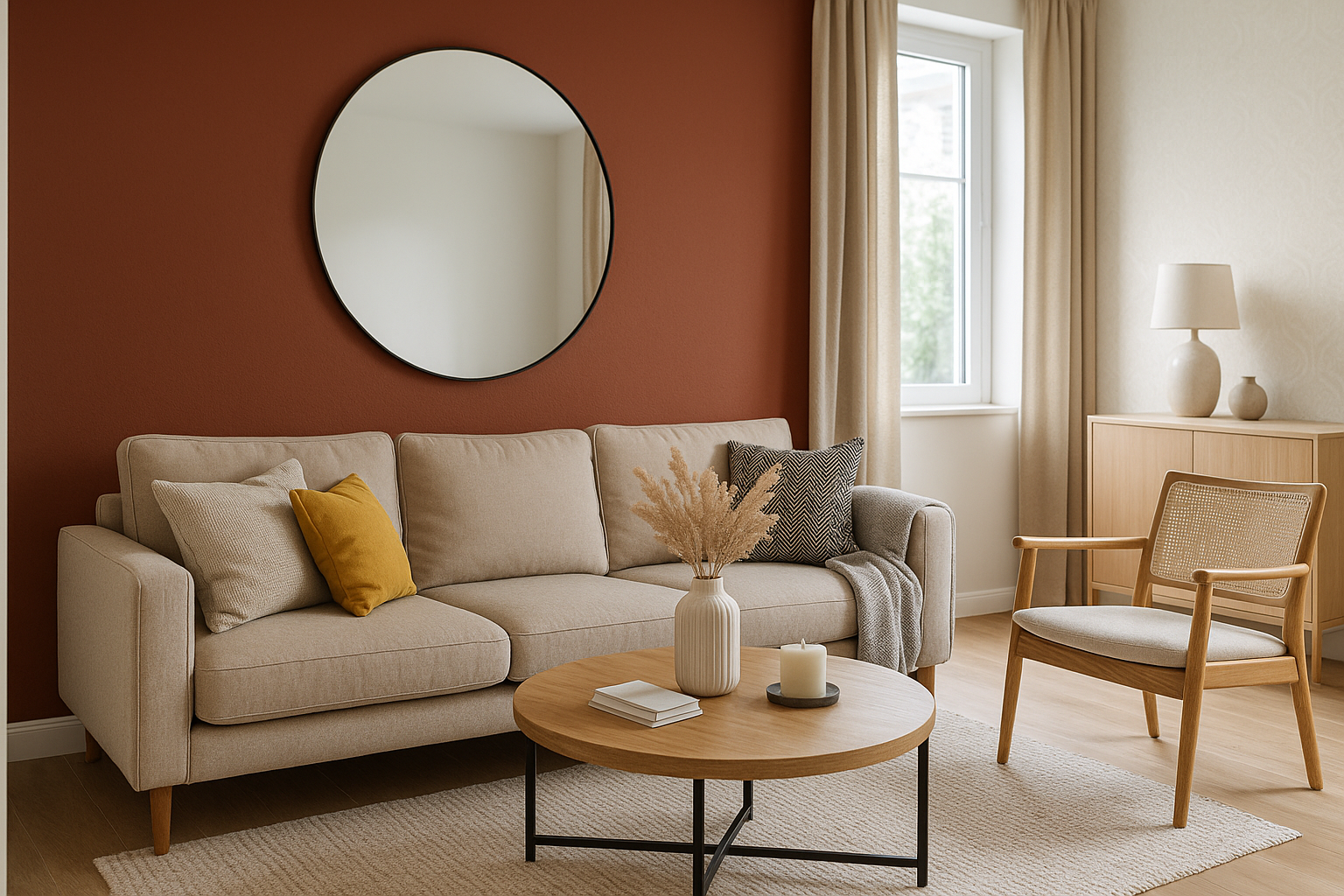
Accent walls are a timeless way to add personality and interest to a room without overwhelming the entire space. Whether you’re aiming for bold contrast or subtle depth, a well-chosen accent wall can become the visual anchor of a room. But when it comes to creating one, the question often arises: should you use paint or wallpaper?
Both options have their merits and knowing when and how to use each can help you make the best choice for your space, style, and budget.
In this article, we’ll explore the pros, cons, and design potential of both paint and wallpaper to help you choose the best route for your next accent wall.
What Is an Accent Wall?
An accent wall is a single wall in a room that features a different color, pattern, or texture than the other walls. It draws the eye, defines a zone, or simply adds character to an otherwise neutral space.
Common locations for accent walls:
- Behind a bed or headboard
- Behind a living room sofa or fireplace
- Dining rooms or home offices
- Entryways or hallways
- Nooks or alcoves
Accent walls work best when they highlight natural focal points or architectural features.
The Case for Paint
Paint is often the first choice when creating an accent wall and for good reason. It’s fast, budget-friendly, and endlessly customizable.
Pros of Painted Accent Walls:
- Affordable and accessible: Paint is cost-effective and easy to find in a wide range of colors.
- Easy to change: Repainting a wall is relatively simple and low-commitment.
- Fast to apply: A painted wall can be completed in a single afternoon.
- Customizable: You can create stripes, ombré effects, geometric patterns, color blocking, and more.
- Matte or glossy finishes: Paint offers multiple textures, from flat to high-gloss.
Best Uses for Paint:
- When you want a clean, bold pop of color
- When working with textured walls that may be difficult for wallpaper
- In moisture-prone areas like bathrooms (using proper paint types)
- For DIY projects or frequent refreshes
Paint works well for minimalist, modern, or contemporary aesthetics where simplicity and flexibility are key.
The Case for Wallpaper
Wallpaper has made a serious comeback in interior design. Today’s options are stylish, diverse, and easier to apply than ever thanks to peel-and-stick varieties and improved adhesives.
Pros of Wallpaper Accent Walls:
- Endless design options: From florals to geometrics, murals to textures, wallpaper offers visual variety that paint can’t replicate.
- Adds texture and depth: Some wallpapers mimic natural materials (wood, brick, grasscloth) or offer tactile finishes.
- High impact: A patterned wallpaper creates a strong statement with minimal effort.
- Great for rentals: Removable wallpaper allows for temporary style upgrades.
- Long-lasting: High-quality wallpaper can last many years with proper care.
Best Uses for Wallpaper:
- When you want detailed pattern or texture
- In smaller spaces like powder rooms or entryways, where bold design has big effect
- For traditional, eclectic, or vintage styles
- When you’re ready to commit to a more permanent design feature
Wallpaper is perfect for adding sophistication, whimsy, or high-design drama.
Design Considerations
Choosing between paint and wallpaper isn’t just about preference it’s about what best suits your space, goals, and lifestyle.
Style
- Use paint if your aesthetic is minimal, Scandinavian, contemporary, or modern.
- Use wallpaper for boho, eclectic, vintage, maximalist, or traditional styles.
Budget
- Paint is typically cheaper, especially if you DIY.
- Wallpaper can be more expensive, especially for custom designs or large walls.
Time and Effort
- Paint is quicker to apply and remove, though it requires prep and drying time.
- Wallpaper takes more time to install (especially if matching patterns), but peel-and-stick options simplify the process.
Wall Condition
- Paint requires smooth walls or patching to avoid showing imperfections.
- Wallpaper can cover some flaws, but not allespecially textured walls.
Can You Combine Both?
Absolutely! In fact, a creative combination of paint and wallpaper can take your accent wall to the next level.
Ideas:
- Paint the lower portion of the wall and wallpaper above (or vice versa)
- Frame a wallpaper panel with painted molding
- Use wallpaper as a backdrop inside painted shelving or niches
- Create a border or color-blocked area with paint and wallpaper side by side
This hybrid approach offers the best of both worlds bold pattern and clean lines.
Tips for a Successful Accent Wall
Regardless of whether you use paint or wallpaper, here are a few final tips:
- Choose the right wall: Pick a wall that naturally draws attention not one that’s cluttered or hidden.
- Keep surrounding walls neutral: Let your accent wall stand out by keeping the rest simple.
- Repeat the colors: Use the accent color or pattern elsewhere in the room for visual cohesion.
- Match your home’s scale: Large prints work better in big spaces; smaller patterns are better for tight areas.
- Sample first: Test paint colors or wallpaper swatches before committing.
An accent wall should enhance the space not compete with it.
Final Thoughts
Both paint and wallpaper offer stylish, creative ways to design a standout wall in your home. Paint is quick, versatile, and budget-friendly. Wallpaper adds drama, texture, and sophistication. Your choice depends on your goals, your aesthetic, and how much commitment you’re comfortable with.
Whether you go bold with color, intricate with pattern, or opt for a subtle textured look, the perfect accent wall is the one that reflects your personality and elevates the room.