
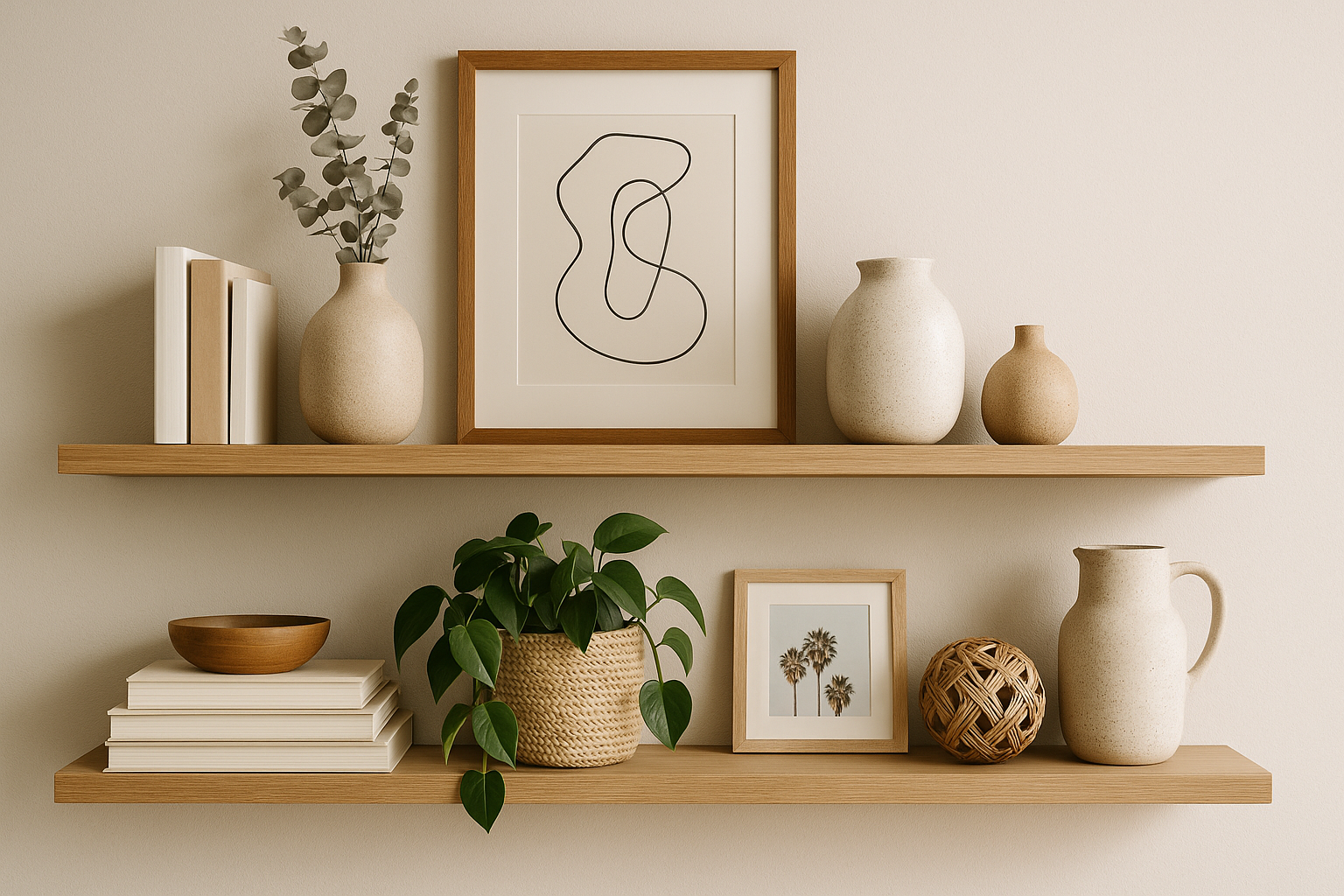
Shelves are one of the most versatile elements in home decor. They can be purely functional, purely decorative, or both. But styling them well is an art one that interior designers have mastered to create balanced, beautiful, and personal spaces.
If your shelves feel cluttered, flat, or lifeless, you’re not alone. With a few design principles and a thoughtful approach, you can transform your shelves into curated showcases that reflect your style and elevate your home.
Start with a Clean Slate
Before you begin styling, remove everything from the shelves. Starting fresh helps you assess the space clearly and prevents you from building around pieces that don’t serve the design.
Use this moment to:
- Dust and clean the surface
- Evaluate what items are worth displaying
- Group objects by color, shape, or theme
- Decide on a general color palette or mood for your shelf display
A blank canvas makes it easier to be intentional with what you put back.
Vary Height and Scale
One of the key elements of a well-designed shelf is variety. Shelves with items all the same size or height feel flat and monotonous. Mixing different heights, shapes, and textures adds interest and movement.
Tips:
- Use books vertically and horizontally to create platforms
- Mix tall vases with short bowls or candles
- Layer large frames behind smaller decor
- Add height with stacked boxes or decorative pedestals
This play with proportions draws the eye around the display and keeps it visually engaging.
Balance Weight and Visual Flow
While symmetry is one approach, balance is more important. You want the shelf to feel evenly weighted from end to end, even if it’s not perfectly symmetrical.
Balance tips:
- Distribute visual “heaviness” (like darker items or dense textures) across the shelf
- Place taller or bulkier items on opposite ends or opposite shelves
- Alternate between filled and empty spaces
- Repeat colors or materials in different spots for cohesion
Step back periodically and check how the arrangement feels from a distance.
Layer Objects for Depth
Flat displays can feel one-dimensional. Instead of lining items in a row, layer them. This technique adds depth and makes your shelves look more curated.
Ways to layer:
- Lean art or frames behind objects
- Place small items in front of larger vases or books
- Nest bowls inside trays
- Stack books and top them with a candle or small plant
Layering is one of the fastest ways to give your shelves a designer-level feel.
Incorporate a Mix of Materials
A shelf filled with all ceramic, all metal, or all glass can feel flat. Designers mix different materials to create texture and contrast.
Try combining:
- Wood for warmth
- Metal for shine
- Glass for lightness
- Stone for weight
- Fabric or woven elements for softness
Even neutral-toned shelves come to life when different textures are used together.
Use Books Creatively
Books aren’t just for reading they’re one of the most useful and flexible tools in shelf styling.
Ideas:
- Stack books horizontally and use them as risers
- Place them vertically with bookends to frame other objects
- Turn book spines inward for a more uniform look
- Use color-coded books for a modern, graphic vibe
A mix of vertical and horizontal books keeps the shelves from feeling too rigid.
Add Greenery or Natural Elements
Every shelf needs a touch of nature. Plants and organic textures bring life, movement, and softness to structured shelves.
Easy options:
- A small trailing plant like pothos or ivy
- A dried floral arrangement in a neutral vase
- A wooden bowl or tray
- Stones, shells, or natural objects collected from travel
Even one small plant can break up the straight lines and add warmth.
Include Personal and Sentimental Items
To avoid the “showroom” look, make sure to incorporate objects that have meaning to you. A shelf should feel personal, not staged.
Ideas:
- Framed photos
- Travel souvenirs
- Handmade pottery or art
- Heirlooms or inherited objects
- Favorite quotes or books
Mixing old and new, mass-market and unique, adds soul to your styling.
Work in Odd Numbers
Odd numbers—especially groups of three—tend to be more visually appealing than even groupings. Designers often use this rule when arranging objects on a shelf.
Try:
- Three candles in varied heights
- A stack of three books topped with a sculpture
- A trio of frames in different sizes
Odd groupings feel more organic and less rigid.
Don’t Overcrowd
The most common shelf styling mistake is too much stuff. Leaving breathing room allows each piece to shine and prevents the display from feeling cluttered.
Tips:
- Leave space between groupings
- Use fewer, larger pieces instead of lots of small ones
- Embrace white space and empty areas
- Rotate objects seasonally to keep things fresh
Less really is more when it comes to achieving a polished look.
Final Thoughts
Shelf styling is part art, part technique. When done thoughtfully, it can completely change the atmosphere of a room adding character, interest, and a sense of order.
By balancing scale, texture, color, and personal touches, you can create shelves that not only look beautiful but tell your story. Don’t be afraid to experiment, rearrange, and edit as you go. Shelf styling isn’t static it’s an ongoing expression of your evolving style.