
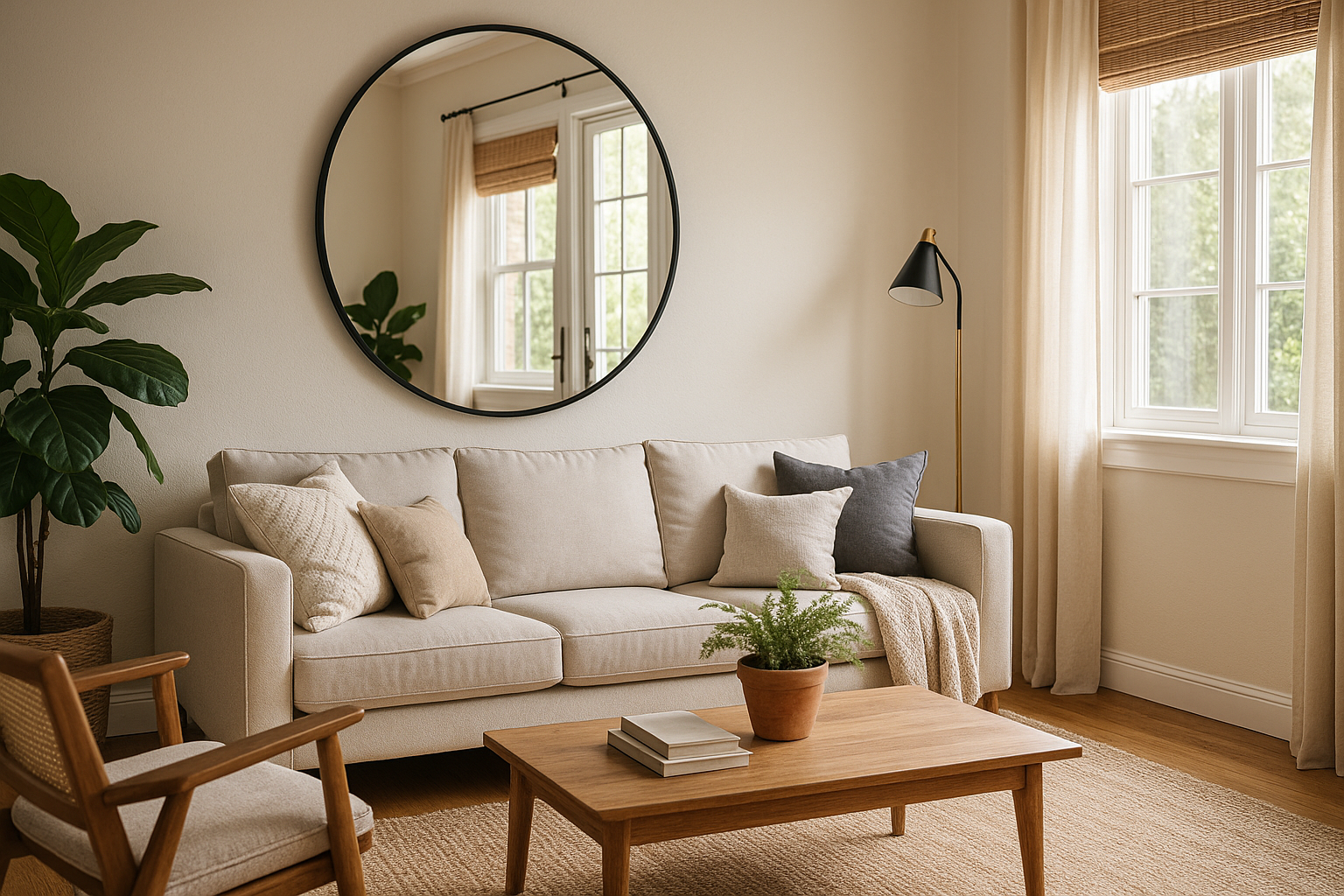
Mirrors are one of the most powerful and underrated tools in home decor. More than just a way to check your outfit, mirrors can completely transform a space—making rooms feel brighter, larger, and more elegant. Whether you live in a cozy apartment or a spacious home, strategically using mirrors can help you amplify natural light and enhance your design.
Here’s how to use mirrors effectively in any room to maximize space and style.
Why Mirrors Work: Light and Illusion
Mirrors reflect both light and space, which is why they’re so useful in interior design. When placed in the right position, a mirror can:
- Bounce natural or artificial light around the room
- Make small spaces appear more open
- Draw attention to focal points or views
- Add depth, symmetry, and style to your decor
The key is understanding placement, proportion, and purpose.
Choose the Right Mirror Size
The larger the mirror, the greater its impact. Oversized mirrors can become statement pieces and significantly open up a room.
- In a small room, a full-length mirror leaning against the wall can give the illusion of a much larger space.
- In a hallway or narrow entryway, a long horizontal mirror expands the area visually.
- In a bedroom or dining room, a large round or rectangular mirror can act like an extra window.
For visual balance, make sure your mirror is scaled to the wall or furniture beneath it. Don’t hang a tiny mirror over a large sofa or console—it will feel lost.
Use Mirrors to Reflect Natural Light
One of the best ways to brighten a room is to position a mirror across from or near a window. This allows it to reflect natural light and spread it throughout the space.
This trick works especially well in darker rooms or areas with limited windows, like hallways or interior bathrooms.
Even in well-lit spaces, mirrors amplify the brightness, making the room feel fresh and vibrant.
Consider Opposite Views
Mirrors reflect whatever they’re facing, so always be mindful of what will be seen in the reflection. Try to reflect something visually appealing, such as:
- A beautiful window view
- A plant or decorative piece
- Artwork or a gallery wall
- A cozy reading nook or chandelier
Avoid placing mirrors where they reflect clutter, blank walls, or undesirable angles.
Create a Focal Point
Instead of using a mirror purely as a secondary element, make it a centerpiece. A bold, decorative mirror can be the main feature of a room. Choose styles with:
- Unusual shapes (arch, sunburst, oval)
- Interesting frames (wood, metal, gold leaf, rope)
- Artistic details or antique finishes
Hang it above a mantel, console table, or bed for a striking and functional decor statement.
Mirror Walls and Panels
For dramatic effect, consider creating a wall of mirrors or using mirrored panels. This technique is ideal for small dining areas, entryways, or rooms without much light.
You can use:
- Framed mirrors arranged in a grid
- Antique-style mirrored panels
- Custom mirrored walls for a seamless effect
These installations visually double the space and give the room an upscale, architectural feel.
Layer Mirrors with Other Decor
Mirrors don’t have to stand alone. You can layer them with:
- Picture frames or art
- Wall sconces
- Shelves
- Hanging plants
Layering adds depth and interest. For example, a mirror above a console table styled with books, candles, and a vase feels rich and curated.
Use Mirrors in Unexpected Places
Mirrors aren’t just for living rooms and bathrooms. Try placing them in unexpected spots:
- Behind open shelving in the kitchen
- Inside a closet door
- At the end of a hallway to add dimension
- In a stairwell to break up the vertical space
- On furniture, like mirrored dressers or side tables
These placements help reflect light into overlooked areas and make tight spaces feel more dynamic.
Combine Mirrors with Lighting
Light and mirrors are a match made in design heaven. Place a mirror behind or near a lamp, sconce, or pendant to magnify the light.
This technique not only brightens the space but also creates a soft, ambient glow that adds mood and sophistication.
In bathrooms, placing lighting on either side of a mirror provides flattering, even illumination—both functional and beautiful.
Choose the Right Frame Style
A mirror’s frame sets the tone for how it blends into your decor. Consider these popular options:
- Minimal black or white frames for modern or Scandinavian spaces
- Distressed wood for rustic or farmhouse styles
- Gold or brass for vintage or glam interiors
- Woven or rattan for boho and coastal vibes
- No frame at all for a sleek, contemporary look
Your frame choice can make the mirror either blend in or stand out—depending on the role you want it to play.
Don’t Overdo It
While mirrors are powerful, too many can feel disorienting or chaotic. Avoid placing mirrors on all four walls or directly across from each other (which can create a never-ending reflection effect).
Stick to one or two statement mirrors per room. Make sure their placement feels intentional rather than excessive.
Maintain Cleanliness
Mirrors collect dust and fingerprints easily, which can dull their reflective quality. Clean your mirrors regularly with a microfiber cloth and streak-free glass cleaner.
Well-maintained mirrors always look more sophisticated and keep your space looking polished.
Final Thoughts: Reflect Your Style
Mirrors are more than functional—they’re design tools that bring light, depth, and personality into your home. Whether you’re trying to make a small room feel bigger, brighten a dim hallway, or add elegance to your space, mirrors are a simple and affordable solution.
Use them with intention, place them with care, and let them reflect the best parts of your home and style.