
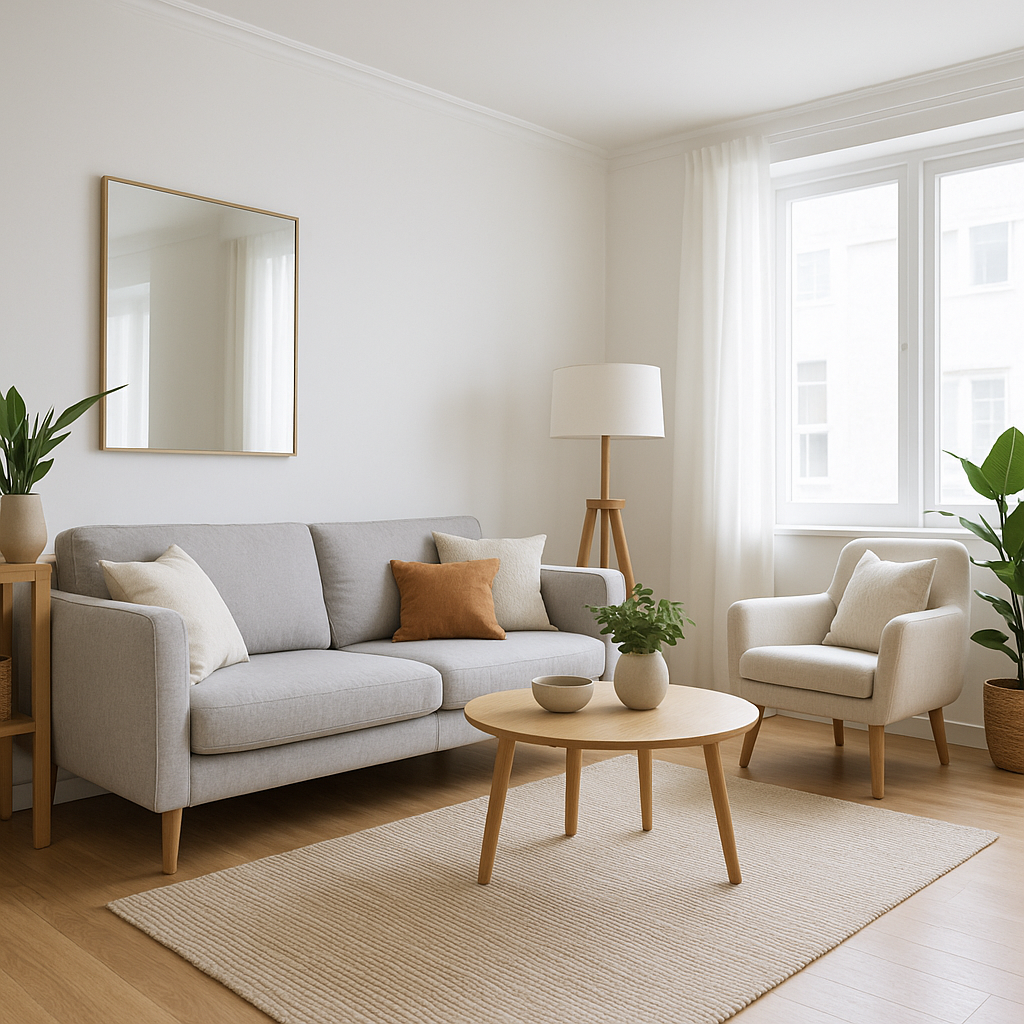
Living in a small space doesn’t mean sacrificing style or comfort. With the right design tricks and smart choices, your tiny living room can feel open, airy, and even luxurious. In this article, we’ll explore practical and aesthetic strategies to help you maximize every inch while keeping your personality front and center.
Start with a Clear Vision
Before bringing in furniture or decor, clarify how you want the space to function. Will it be for lounging, working, entertaining, or all three? Knowing this will help you prioritize elements and avoid unnecessary clutter.
Choose the Right Color Palette
Color can dramatically affect how spacious a room feels. Light, neutral colors—like whites, soft grays, beiges, and pastels—tend to make spaces feel bigger and brighter. You don’t have to stick with plain white walls, but keeping the palette light and cohesive helps maintain visual openness.
Consider using a monochromatic color scheme to create harmony, or adding pops of color through small accessories rather than large pieces.
Let Natural Light In
Maximize natural light wherever possible. Avoid heavy, dark curtains that block sunlight and instead opt for sheer or light-filtering window treatments. Keep window sills clear and avoid placing tall furniture in front of windows.
Mirrors are another great way to amplify light. When placed opposite or near windows, they reflect light around the room and create the illusion of more space.
Scale Down Your Furniture
When space is limited, large, bulky furniture can quickly overwhelm the room. Instead, choose pieces that are scaled for small spaces. Look for sofas with low backs, slender arms, and legs that lift the piece off the floor—this creates a feeling of openness underneath.
Multipurpose furniture is also a smart investment. Consider items like ottomans with hidden storage, fold-out coffee tables, or a loveseat instead of a full-sized couch.
Keep It Low and Open
Low-profile furniture tricks the eye into perceiving higher ceilings. Pairing low seating with tall vertical decor (like a standing lamp or artwork) draws the eye upward, creating a sense of balance and spaciousness.
Also, opt for open or glass furniture instead of heavy, closed designs. A glass coffee table or a floating shelf can make the room feel less dense and more breathable.
Use Smart Storage
Clutter is the enemy of a small space. Prioritize hidden storage whenever possible. Look for sofas with built-in compartments, nesting tables, or wall-mounted cabinets.
Maximize vertical space by adding shelves above eye level, which draw the eye upward and free up floor area. You can also use tall bookcases or ladder shelves to combine storage and style.
Create Zones with Rugs and Lighting
Defining areas within your small living room helps it feel intentional rather than cramped. Use rugs to create zones—for example, one rug under the seating area and another in a workspace.
Lighting also helps define different parts of the room. Mix overhead lights with floor lamps and wall sconces to create layered lighting that adds depth and avoids flatness.
Keep Decor Simple and Cohesive
Less is more in small rooms. Choose a few statement pieces rather than many small accessories. When adding wall art, go for one large piece or a tightly arranged gallery to avoid visual clutter.
Use decorative elements that are both functional and beautiful—like a sculptural lamp or a decorative storage basket. This keeps the room feeling styled but not overdone.
Avoid Pushing Everything Against the Walls
It may seem counterintuitive, but pulling furniture slightly away from the walls can make a room feel more spacious. Leaving breathing room around your seating area creates a sense of flow and balance.
You can also float a small sofa or chair in the middle of the room and use a low bookcase or open shelving as a divider.
Keep the Floor as Visible as Possible
The more floor you can see, the bigger the room feels. Choose furniture with exposed legs and avoid heavy rugs that cover the entire floor area. If you need rugs for warmth or definition, choose ones with light colors and simple patterns.
Add Vertical Elements
Use tall plants, vertical artwork, or long curtains hung high above the window frame to draw the eye upward. This gives the illusion of taller ceilings and adds elegance to the space.
Tall bookshelves and vertical storage units also add functionality without taking up too much square footage.
Consider Built-Ins or Wall-Mounted Fixtures
When you can’t go out, go up. Built-in shelving or wall-mounted lighting and furniture (like floating desks or console tables) save floor space while offering utility.
Even mounting your TV on the wall and using a narrow console underneath can significantly open up floor area.
Limit the Number of Patterns
Too many patterns can overwhelm a small space. Stick to one or two patterns in similar color tones, and use them sparingly—perhaps in throw pillows or a rug.
Solid colors and simple textures tend to be more visually soothing and help prevent the space from feeling busy.
Maintain a Clear Sight Line
The more your eye can travel without interruption, the more open the space feels. Avoid tall dividers or furniture that blocks the view from one end of the room to the other.
Use open shelving instead of closed bookcases, and keep the layout open where possible.
Embrace Minimalism
Small living rooms thrive on simplicity. Don’t try to fit too many pieces or styles into one space. Focus on function, comfort, and personality—curate rather than clutter.
A minimalist approach with thoughtful accents helps create a peaceful environment where every piece has a purpose.
Final Thoughts: Style Without Sacrificing Space
Decorating a small living room doesn’t have to be limiting. In fact, the challenge can spark some of the most creative and beautiful results. With the right strategies—like choosing light colors, scaling furniture, maximizing natural light, and embracing simplicity—you can make your small living room feel spacious, stylish, and completely your own.